Michelle Alexander
Michelle Alexander is a civil rights lawyer, legal scholar, and author whose 2010 book The New Jim Crow: Mass Incarceration in the Age of Colorblindness reshaped public discourse on race and criminal justice in America. Born in 1967, she grew up in a family that instilled in her a deep commitment to social justice, and she pursued that calling through elite legal education, earning her J.D. from Stanford Law School. She clerked for Justice Harry Blackmun on the U.S. Supreme Court before joining the ACLU of Northern California, where she directed the Racial Justice Project.
Her academic career has included faculty positions at Stanford Law School and Ohio State University’s Moritz College of Law, as well as a fellowship at the Stanford Center for Advanced Study in the Behavioral Sciences. Throughout her scholarship and advocacy, Alexander focused on the ways that ostensibly race-neutral legal systems perpetuate racial hierarchy — a preoccupation that found its fullest expression in The New Jim Crow.
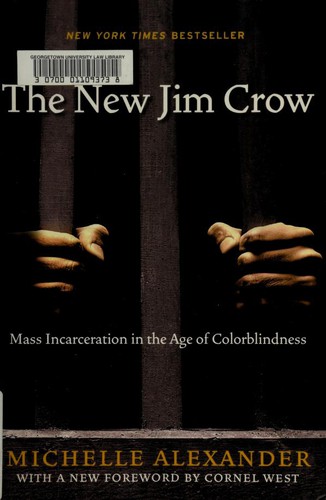
Published by The New Press, The New Jim Crow argues with meticulous documentation that the War on Drugs and the subsequent explosion of mass incarceration have functioned as a system of racialized social control, stripping millions of Black men of civil rights — including voting, jury service, and access to housing and employment — in ways that echo the formal Jim Crow laws of the post-Reconstruction South. The book spent more than 250 weeks on the New York Times bestseller list and is widely credited with shifting the terms of the national conversation about criminal justice reform.
Alexander has been a visiting professor at Union Theological Seminary in New York and has written and spoken widely about the intersections of race, poverty, and the carceral state. She is a recipient of numerous honors recognizing her contributions to law and social justice, and her work continues to be assigned in law schools, universities, and activist organizations across the country. She remains one of the most cited and influential voices on structural racism in American legal and political life.