Maya Angelou
Maya Angelou was born Marguerite Annie Johnson on April 4, 1928, in St. Louis, Missouri, to Bailey Johnson, a naval dietitian, and Vivian Baxter Johnson, a nurse and later a business owner. After her parents’ divorce when she was three, she and her brother Bailey were sent to live with their paternal grandmother in Stamps, Arkansas—a small, rigidly segregated town where Angelou first experienced the full weight of racial injustice and where she also first discovered the transformative power of language. The trauma she suffered at age eight—sexual assault by her mother’s boyfriend, and the violent aftermath that left her mute for nearly five years—deepened her relationship with literature; during her silence, she read voraciously, memorizing vast quantities of poetry and prose that would form the literary bedrock of her later work.
Angelou’s life before she became a writer was astonishing in its variety and scope. She was, at various points in her young adulthood, a streetcar conductor (the first Black female streetcar conductor in San Francisco), a dancer, a singer, an actress, a playwright, and a civil rights activist. She lived for a period in Cairo and then Accra, Ghana, where she worked as a journalist and was part of a vibrant expatriate African-American intellectual community. She knew and worked alongside Malcolm X and Martin Luther King Jr., both of whom she deeply admired and both of whom were assassinated in the period she was writing her first book. This life—so rich, so painful, so politically engaged—would provide the material for a series of six autobiographical volumes that constitute her primary literary achievement.
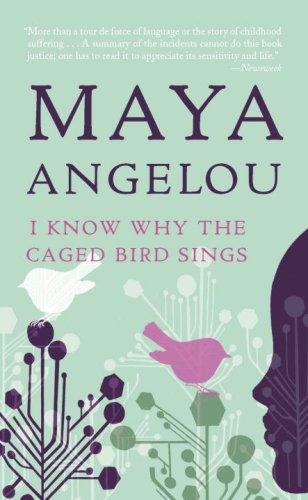
The first and most celebrated of those volumes, I Know Why the Caged Bird Sings (1969), available on Writers Review, covers her childhood and adolescence through the birth of her son when she was seventeen. The book is widely regarded as a masterpiece of American autobiography—a work of lyrical beauty and moral authority that transformed the way American literature thought about Black womanhood, childhood, trauma, and resilience. It was nominated for the National Book Award, remained on bestseller lists for years, and has been continuously in print ever since. The title, drawn from Paul Laurence Dunbar’s poem, encapsulates the book’s central tension between constraint and the irrepressible human impulse toward song and freedom. The book was groundbreaking in its frank treatment of race, sexuality, and violence, and is regularly listed among the most important American books of the twentieth century.
Angelou’s prose style is one of the most distinctive and instantly recognizable in American literature: deeply musical, attuned to the rhythms of Southern Black speech and the cadences of scripture and blues, simultaneously earthy and elevated. She writes the body—its pleasures, its pains, its indignities, and its triumphs—with exceptional vividness. Her humor is sharp and often saving; her anger is righteous but never merely polemical. She is a writer whose work insists on the full complexity of her characters’ humanity while never flinching from the systemic forces arrayed against them.
Maya Angelou went on to publish five further autobiographical volumes, multiple collections of poetry, and numerous essays. She was appointed by President Clinton to deliver the inaugural poem “On the Pulse of Morning” at his 1993 inauguration. She spent the last decades of her life as Reynolds Professor of American Studies at Wake Forest University, teaching and writing until her death in May 2014. She received the Presidential Medal of Freedom in 2011. Her influence on American literature, civil rights discourse, feminist thought, and popular culture has been incalculable.