Markus Zusak
Markus Zusak is an Australian author best known for a novel that has become one of the most beloved works of literary fiction of the twenty-first century, a book that transformed the way millions of readers think about storytelling, mortality, and the endurance of human kindness. Born in 1975 in Sydney, Australia, to German and Austrian immigrant parents, Zusak grew up hearing his parents’ stories of wartime Germany—of bomb shelters, of evacuees, of the strange ordinary life that persisted beneath the shadow of catastrophe. Those stories would eventually become the raw material for his most celebrated work, filtered through an imagination shaped by both Australian vernacular storytelling and the darker European fairy-tale tradition.
Zusak published his first four novels—The Underdog (1999), Fighting Ruben Wolfe (2000), When Dogs Cry (2001), and The Messenger (2002, published as I Am the Messenger in some markets)—while still in his twenties. These early works, largely aimed at young adults, established his gift for street-level Australian voice, his interest in moral growth under pressure, and his tendency to push narrative form into unexpected territory. The Messenger won the Children’s Book Council of Australia Book of the Year Award and attracted an international readership, signaling that Zusak’s audience would extend well beyond any single age group.
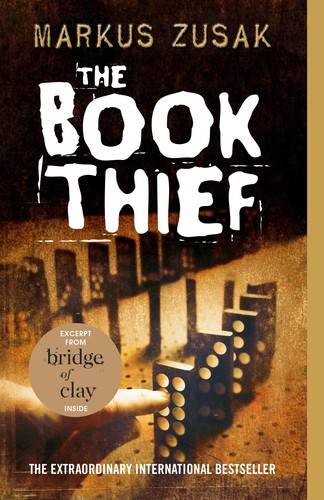
The Book Thief (2005), featured on WritersReview, announced an entirely new order of ambition. Narrated by Death—a tired, observant, darkly wry presence who is troubled by human beings—the novel follows Liesel Meminger, a young girl in Nazi Germany who steals books and discovers in them a refuge from the war destroying everything around her. Set in a fictional town outside Munich between 1939 and 1943, the novel traces Liesel’s relationships with her foster parents, her best friend Rudy, and Max Vandenburg, the Jewish man her family hides in their basement. It became an international sensation, spending years on bestseller lists, selling over sixteen million copies worldwide, being translated into more than forty languages, and adapted into a successful film in 2013.
Zusak’s style is defined by its lyrical intensity and its willingness to make the formal device—Death as narrator—into a vehicle for genuine philosophical reflection. His prose has an aphoristic quality, delivering observations about life and death with the confidence of someone who has thought hard about both. The novel’s emotional power comes not from manipulation but from the slow accumulation of love between characters rendered with great specificity and care.
After a gap of thirteen years, Zusak published Bridge of Clay (2018), a sprawling, multi-generational story about five brothers in Sydney. The novel confirmed that The Book Thief was not a lucky accident but the expression of a sustained literary vision. Zusak remains one of Australia’s most celebrated authors and one of the rare writers whose work reaches across age categories to find readers wherever the capacity for wonder and grief coincide.