Marcus Aurelius
Marcus Aurelius (121–180 CE) was born in Rome into an equestrian family with Spanish roots and rose, through adoption and imperial patronage, to become one of the most powerful men who ever lived — and one of the few who seemed genuinely uninterested in power for its own sake. Adopted by the Emperor Antoninus Pius at the direction of Hadrian, Marcus was groomed for the throne from boyhood, educated by the finest tutors in Rome, and introduced early to Stoic philosophy — a discipline that would remain the organizing principle of his inner life until his death.
He became Emperor of Rome in 161 CE, ruling jointly at first with his adoptive brother Lucius Verus, and then alone from 169 CE until his death in 180 CE. His reign was marked not by peace but by constant crisis: plague devastated the empire (the Antonine Plague killed perhaps five million people), Germanic tribes pressed on the northern frontiers for decades, and political intrigue surrounded the court throughout. Marcus spent much of his reign on military campaigns along the Danube, governing an empire of sixty million people from a tent.
Throughout these pressures, Marcus wrote. Not for publication — the twelve books we know as Meditations were private notes, written in Greek, addressed to himself. Their form is spare and repetitive: short maxims, extended reflections, repeated reminders of Stoic principles. Death is nothing to fear. The present moment is all that exists. Our judgments about events, not the events themselves, cause our suffering. Virtue is the only true good. The work is sometimes called the world’s most intimate philosophical document — a ruler at the height of power reminding himself, again and again, that power is nothing.
The Stoic philosophy Marcus practiced emphasized four cardinal virtues — wisdom, justice, courage, and temperance — and the importance of aligning one’s will with nature and reason. Crucially, Stoicism as Marcus understood it was not passive resignation but active engagement: doing one’s duty fully, without attachment to outcomes, without complaint about what cannot be changed. His reflections on how to respond to difficult people, how to work without ego, and how to face mortality without flinching have attracted readers in every subsequent century, and in recent decades have become central texts in popular psychology and executive leadership.
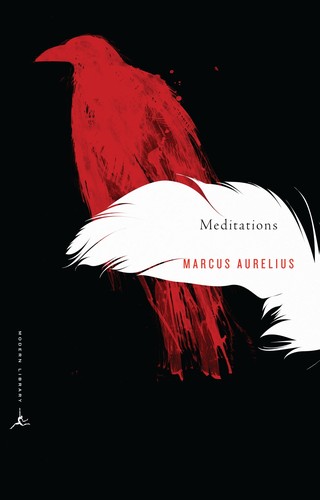
Meditations, reviewed on WritersReview.com, is one of those rare books that can be opened at any page and yield something useful for the day ahead. It has been carried into battle, cited in courtrooms, and kept on bedside tables for eighteen hundred years. Marcus Aurelius was not a perfect man — his persecution of Christians and his designation of the weak Commodus as his heir are among his failures — but as a document of a person trying to live well under impossible conditions, Meditations has no equal.