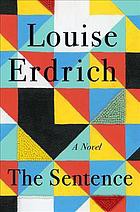
Louise Erdrich
Louise Erdrich is one of the most significant American novelists of the past half century, a writer whose work has reshaped the landscape of American literature by placing Native American experience — specifically the history and contemporary life of Ojibwe and other Plains communities — at the center of an epic, multigenerational fictional project of extraordinary scope and power. Born in 1954 in Little Falls, Minnesota, and raised in Wahpeton, North Dakota, she is a member of the Turtle Mountain Band of Chippewa Indians. She studied at Dartmouth College, where she was part of the first class to admit women, and received her MFA from Johns Hopkins University. She lives in Minneapolis, where she operates Birchbark Books, an independent bookstore with a focus on Native American literature.
Erdrich’s fiction has spanned more than four decades and comprises a loosely interconnected series of novels set primarily in North Dakota among families whose lives intersect across generations. Beginning with Love Medicine (1984), which won the National Book Critics Circle Award and was an immediate commercial and critical success, she has built a fictional world of rare depth and consistency, peopled by characters who recur across multiple books and whose individual stories accumulate into a collective portrait of survival, dispossession, cultural resilience, and the persistence of spiritual life in the face of historical devastation. Her 2012 novel The Round House won the National Book Award for Fiction, and her 2021 novel The Night Watchman — based on the story of her grandfather’s role in resisting a 1950s federal termination policy — won the Pulitzer Prize for Fiction. Her work reviewed on WritersReview demonstrates the full maturity of her novelistic vision.
Erdrich’s prose is characterized by its capacity to hold multiple registers simultaneously — lyrical and earthy, comic and devastating, grounded in place and alert to the spiritual. She writes from within a tradition of oral storytelling while fully inhabiting the resources of the literary novel, and the result is fiction that feels both ancestral and urgently contemporary. She is unsparing about the violence of American colonial history while remaining deeply attuned to the humor, love, and irreducible humanity of the communities she depicts. This combination — historical gravity and human warmth — is the signature of her achievement.
Beyond her fiction, Erdrich has written poetry, children’s books, a memoir about early motherhood, and essays on Ojibwe culture and language. She is also a dedicated advocate for Native American rights and for the preservation of indigenous languages. Her bookstore, Birchbark Books, has become a cultural institution in Minneapolis, a gathering place for writers and readers committed to Native American literature and the broader life of the book. Louise Erdrich’s career represents one of the great ongoing projects of American literature — a sustained attempt to tell the full truth of this continent’s history and to honor the communities that have endured within it.