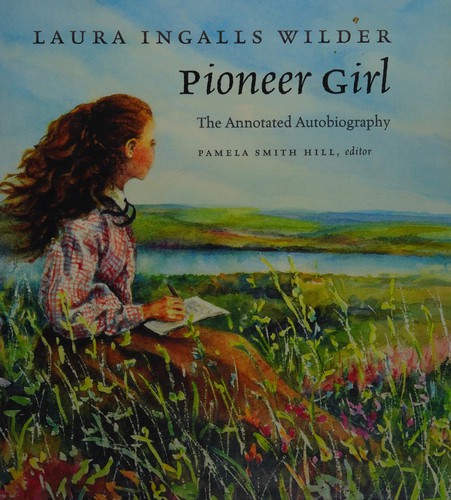
Laura Ingalls Wilder
Laura Ingalls Wilder was an American author whose Little House on the Prairie series of semi-autobiographical novels, written in her sixties and seventies, became among the most beloved works of children’s literature in the English language and created a mythology of the American frontier that has shaped the cultural imagination of generations of readers worldwide. Born in 1867 in Pepin, Wisconsin, she was the second daughter of Charles and Caroline Ingalls, a family whose westward migrations across Minnesota, Iowa, Kansas, and Dakota Territory during the homestead era provided the material for her books. She lived to the age of ninety, witnessing the transformation of the frontier she had known as a child into the settled American heartland.
Wilder did not begin writing the books that would make her famous until 1930, when, at the encouragement of her daughter Rose Wilder Lane — herself a successful journalist — she began transforming her childhood memories into fiction. Little House in the Big Woods was published in 1932, when Wilder was sixty-five years old, and was immediately successful. Eight more volumes followed over the next decade, tracing the Ingalls family’s journey westward and Laura’s own growth from childhood to young womanhood and her marriage to Almanzo Wilder. The books reviewed on WritersReview, including Little House on the Prairie, are the works that most fully embody her vision of pioneer life and her complex depictions of homestead culture.
The question of the books’ authorship has been a subject of scholarly debate. Caroline Fraser’s Pulitzer Prize-winning biography Prairie Fires (2017) documents the extensive role played by Rose Wilder Lane in shaping the manuscripts, suggesting a collaborative authorship that Wilder herself never fully acknowledged. Equally, the books’ idealizing treatment of white settlement — which elides or minimizes the dispossession of Native Americans whose lands the Ingalls family occupied — has become the subject of serious critical reexamination, leading the American Library Association to rename its children’s literature award that had been named in Wilder’s honor. These scholarly and ethical reckonings have complicated the books’ legacy without erasing the genuine achievement they represent.
What Wilder accomplished, whatever the complications of authorship and ideology, was to preserve with extraordinary vividness the texture of a way of life — the making of butter, the building of a house, the rhythms of agricultural labor, the experience of blizzard and drought and grasshopper plague — that would otherwise have disappeared without literary record. The Little House books are primary historical documents as well as works of fiction, and their power to move readers has proven extraordinarily durable. Laura Ingalls Wilder died in 1957, three days after her ninetieth birthday, having lived long enough to see herself become an American legend and to know that her books had found a permanent place in the literature of childhood.