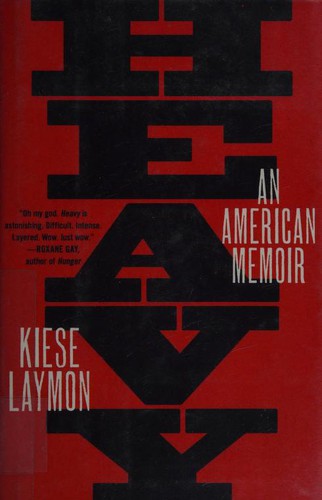
Kiese Laymon
Kiese Laymon was born in 1974 and grew up in Jackson, Mississippi, raised primarily by his mother, Linda Laymon, a political science professor whose demanding, complicated love forms the emotional center of his memoir. He attended Millsaps College in Jackson before transferring to Oberlin College in Ohio, where he earned his bachelor’s degree, and later received his MFA in fiction from Indiana University. He has taught at Vassar College and is currently a professor at the University of Mississippi.
Laymon established himself first as a fiction writer and essayist whose work engaged with race, body, sexuality, Mississippi, and the violence—intimate and structural—that shapes Black life in America. His debut novel, Long Division (2013), was a formally inventive work that wove together two timelines and two Black Mississippi teenagers named Citoyen “City” Coldson, one in 1964 and one in 2013, using time travel and metafictional play to examine how history echoes through generations.
His memoir, Heavy: An American Memoir, published in 2018, is the work for which he is most widely known. Written in second person—addressed throughout to his mother—the book traced the history of his relationship with his body, with food, with shame, with love, and with the weight of Black existence in Mississippi and America. Beginning with his childhood in Jackson and moving through his years of education, writing, gambling addiction, and the complicated reckoning with his mother’s expectations and his own self-destruction, Heavy was praised as one of the most formally daring and emotionally honest memoirs in recent American literature. It won the Andrew Carnegie Medal for Excellence in Nonfiction and was named a best book of the year by dozens of publications.
What distinguished Heavy from conventional memoir was Laymon’s insistence on using his own life not as a vehicle for triumph or redemption but as a site of unflinching examination—of the ways that racism, poverty, love, and shame become inscribed in the body, and of the costs, personal and political, of surviving in a country that has always defined Black bodies as problems to be managed rather than persons to be known.
Kiese Laymon continues to write essays, fiction, and nonfiction that are widely read and taught. His work occupies a distinctive space in American letters—politically engaged, formally ambitious, deeply personal, and committed to a rigorous honesty about what it means to be Black, fat, Southern, and alive in the twenty-first century United States.