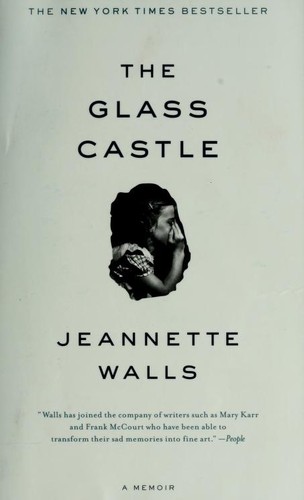
Jeannette Walls
Jeannette Walls was born in 1960 in Phoenix, Arizona, the second of four children in a family that would come to define both the promise and the peril of American bohemian idealism. Her father, Rex Walls, was a charismatic, brilliantly intelligent, and deeply troubled man—a self-taught engineer, a visionary dreamer, and an alcoholic whose inability to sustain ordinary life kept the family in perpetual motion and perpetual poverty. Her mother, Rose Mary Walls, was an artist who prized her own freedom above domestic responsibility. Together they raised four children in a succession of ramshackle homes across the American Southwest and West Virginia, periods of adventure and wonder shadowed always by hunger, cold, instability, and neglect.
Walls escaped this upbringing through determination and sheer force of will, making her way to New York City at seventeen with almost no money. She attended Barnard College, graduating with honors, and built a career as a journalist covering culture and celebrity for major publications including New York magazine. For years she lived a successful life in Manhattan while keeping her origins almost entirely secret—a concealment that forms one of the emotional centers of her memoir. It was only when a chance encounter with her homeless mother on a New York street forced a reckoning that she began to write honestly about where she came from.
The Glass Castle (2005), available on Writers Review, is the memoir that resulted from that reckoning—one of the most remarkable and improbable literary success stories of the twenty-first century. The book tells the story of Walls’s itinerant, impoverished childhood with a directness and lack of self-pity that startled reviewers and readers alike. It is a narrative that refuses easy moral categorization: Rex Walls, for all his failures and cruelties, is rendered with genuine love and understanding; Rose Mary Walls is presented as both maddening and, in her own terms, coherent. The title refers to the glass castle Rex always promised to build—a dream that served simultaneously as inspiration and as an excuse for never settling down. The book spent more than 260 weeks on the New York Times bestseller list, was adapted into a film in 2017 starring Brie Larson, and has sold millions of copies worldwide.
Walls writes with a journalist’s precision and economy, avoiding the rhetorical inflation that can afflict memoir and allowing her extraordinary material to speak for itself. Her tone is one of the book’s most distinctive achievements: neither aggrieved nor falsely cheerful, she writes about her childhood with a quality of bemused wonder—as if she is still slightly astonished by the world she came from—that is simultaneously disarming and devastating. She is particularly skilled at rendering a child’s limited understanding of circumstances that the adult reader can see far more clearly.
Jeannette Walls has gone on to write other books, including the novel Half Broke Horses (2009), which imagines her maternal grandmother’s life, but The Glass Castle remains her defining work—a memoir that has become a touchstone for readers and writers interested in the literature of poverty, family, resilience, and the complex emotional calculus of understanding parents whose failures were also, in some lights, a kind of freedom. She lives on a farm in rural Virginia with her husband, the writer John Taylor.