J.D. Salinger
Jerome David Salinger was born on January 1, 1919, in New York City, the second child of a Jewish father who imported Polish hams and a Scottish-Irish mother. He grew up on the Upper West Side of Manhattan, attending a series of schools before his father enrolled him in the Valley Forge Military Academy in Pennsylvania, whose atmosphere of institutional authority and forced conformity provided the direct inspiration for Pencey Prep in The Catcher in the Rye. He attended several colleges without distinction, studying briefly at New York University, Ursinus College, and Columbia University, where Whit Burnett’s fiction writing class proved genuinely formative. He was publishing stories in Story magazine by 1940, developing the voice and the thematic preoccupations that would define his career.
Salinger’s wartime service was transformative and traumatic. He served in the Army Counter Intelligence Corps and participated in the D-Day invasion of Normandy and the Battle of the Bulge, and he was present at the liberation of a concentration camp. He was briefly hospitalized in Germany for what was then called ‘combat stress reaction.’ He continued writing stories throughout his service — the manuscript of what would become The Catcher in the Rye was reportedly in his duffel bag throughout the campaign — and he published steadily in prestigious magazines including The Saturday Evening Post and, most importantly, The New Yorker, which became the primary home for his mature fiction.
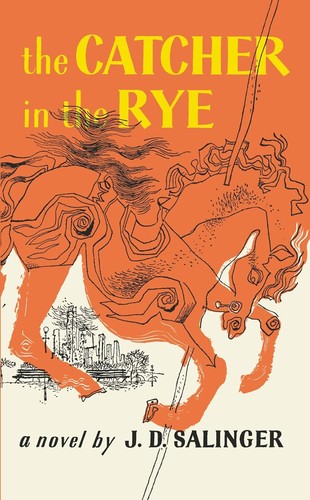
The Catcher in the Rye, published in July 1951, is one of the most influential American novels of the twentieth century. Its narrator, the sixteen-year-old Holden Caulfield, has been expelled from Pencey Prep and spends three days in New York City before returning home, observing and commenting on the ‘phoniness’ of adult society with the exhausting intensity of adolescent idealism. The novel’s first-person voice — colloquial, confessional, searching — was genuinely new in American fiction and profoundly influential on subsequent generations of writers. The novel became an immediate bestseller, beloved by adolescents and celebrated by critics, though it also attracted controversy for its language and subject matter.
Salinger’s prose is inseparable from Holden’s voice: the repetitions and qualifications, the profanity, the sudden switches between sardonic observation and genuine grief create a portrait of adolescent consciousness that has never been surpassed for authenticity. The novel’s central tension — between Holden’s vision of an uncorrupted innocence and his knowledge of its impossibility — gives it a genuine tragic dimension beneath its comic surface.
After publishing The Catcher in the Rye, Salinger published a further collection and two long novellas before withdrawing entirely from public life, moving to Cornish, New Hampshire, and eventually refusing all publication. He died on January 27, 2010. His retreat from literary celebrity has become as famous as his fiction, a performance of the anti-phoniness ethic his protagonist preached. The Catcher in the Rye remains one of the defining novels of American adolescence and has sold more than sixty-five million copies worldwide.