Hanya Yanagihara
Hanya Yanagihara was born on September 20, 1974, in Los Angeles, California, and grew up partly in Hawaii and Texas, the daughter of a Korean American physician. She attended Smith College, where she studied anthropology, and built a career in magazine journalism, eventually becoming editor-in-chief of T: The New York Times Style Magazine. This background in visual culture and long-form narrative journalism informed her fiction’s extraordinary attention to the aesthetics of objects and spaces and its ambition of total immersive coverage of a subject. She published her debut novel, The People in the Trees, in 2013, a morally complex narrative inspired by the story of the Nobel Prize-winning virologist Daniel Carleton Gajdusek, but it was her second novel that brought her international literary celebrity.
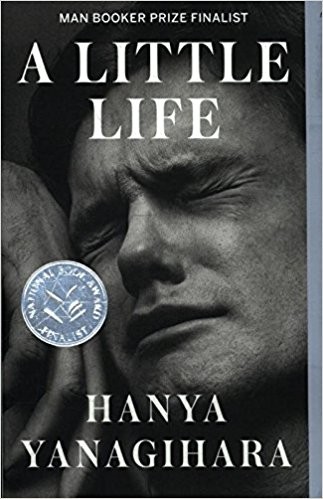
A Little Life, published in 2015, is a novel of deliberate and nearly overwhelming extremity. It follows four friends from a Massachusetts college through their adult lives in New York — Willem, a working actor; JB, a painter; Malcolm, an architect; and Jude St. Francis, a lawyer whose past conceals a history of abuse so severe that it gradually becomes the novel’s central subject. At 720 pages, it is a work of total commitment to its characters and to its unflinching examination of trauma, suffering, and the possibility of love. It was a finalist for the Man Booker Prize, the National Book Award, and the Kirkus Prize, and became one of the most debated literary novels of the decade.
A Little Life provoked strong and divided responses. Its admirers found it one of the most emotionally powerful novels in recent memory, a work that honored the reality of severe trauma with an honesty rarely attempted in literary fiction. Its critics argued that its accumulation of suffering crossed the line from serious engagement into exploitation. Both responses attested to the extraordinary intensity of Yanagihara’s vision. The novel refuses the consolations of conventional narrative — redemption, recovery, resolution — and insists instead on the intractability of certain kinds of pain, a position that is as philosophically serious as it is emotionally demanding.
Yanagihara’s prose style is expansive, meticulous, and deeply absorbed in the interior lives of her characters. She writes with a almost anthropological attention to the details of how people live — the food they cook, the art they love, the rooms they inhabit — and this material specificity grounds even her most extreme emotional content in a recognizable human world. Her sentences are long and reflective, building accumulative pressure rather than delivering shock, and her narrative voice maintains a steady compassion for all of its characters even in their worst moments.
Hanya Yanagihara’s impact on contemporary literary fiction has been significant. She demonstrated that there was an appetite for novels of genuine formal ambition and emotional extremity, and her work has generated serious critical discussion about the ethics of representing trauma in fiction. Her third novel, To Paradise (2022), confirmed her ambition and her willingness to take substantial formal risks, and she remains one of the most important and discussed novelists of her generation.