Graeme Macrae Burnet
Graeme Macrae Burnet is a Scottish author whose work has established him as one of the most interesting and formally inventive crime and literary fiction writers working in Britain today. Born in 1967 in Kilmarnock, Ayrshire, Burnet studied English literature at the University of Glasgow and later worked in various capacities—including teaching and translation work in Prague, Porto, and Lyon—before publishing his debut novel in his mid-forties, a trajectory that lends his work the gravity of a writer who chose fiction rather than defaulted to it.
His debut novel, The Disappearance of Adèle Bedeau (2014), introduced the fictional construct of “Raymond Brunet”—a pseudonymous French author—as the ostensible author of a crime novel that Burnet claimed to have translated and edited. This metafictional game, played absolutely straight, established the ludic and archival sensibility that would characterize his subsequent work. The novel drew on the tradition of French psychological crime fiction to explore obsession, guilt, and the claustrophobia of small-town life with quiet intensity.
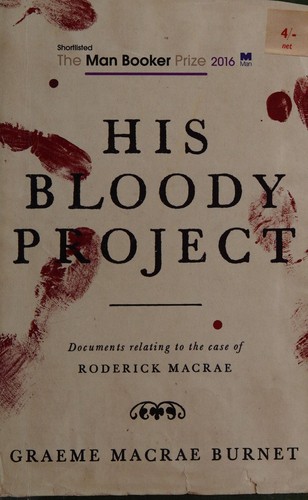
His Bloody Project (2015), featured on WritersReview, brought Burnet to wide international attention. Presented as a true crime case study from nineteenth-century Scotland—complete with a preface explaining how the documents were assembled, the testimony of the accused, witness statements, and a trial transcript—the novel reconstructs the events surrounding three murders committed by a young crofter named Roderick Macrae in the Scottish Highlands in 1869. The fictional apparatus is immaculate: every document feels genuine, the Highland setting is rendered with austere precision, and the central question—whether Roderick is a cold-blooded killer or a victim of circumstance and social oppression—resists easy resolution. The novel was shortlisted for the Man Booker Prize in 2016 and became a major bestseller, celebrated both as a page-turning crime narrative and as a serious literary achievement.
Burnet’s style is shaped by his interest in unreliable narration and the limits of documentation. His novels ask how we know what we know about the past—and the answer is always: imperfectly, through fragments, through the distortions of memory and self-interest. This epistemological skepticism gives his work a philosophical depth that distinguishes it from conventional historical crime fiction.
His subsequent novel, Case Study (2021), returned to the double-author device with a story about a woman investigating a 1960s therapist she believes caused her sister’s death. Burnet lives in Glasgow and has become an increasingly significant figure in Scottish literary culture—a writer whose work refuses the comfort of resolution while remaining compulsively readable.