George Orwell
Eric Arthur Blair, who wrote under the pen name George Orwell, was born on June 25, 1903, in Motihari, Bengal, then part of British India. His father was a minor official in the Indian Civil Service, and the family returned to England when Orwell was young. He was educated on scholarship at Eton College, where he developed an early skepticism toward authority and class privilege. Rather than attending university, he joined the Imperial Police in Burma in 1922, an experience that deepened his revulsion at imperialism and social injustice, and which he later explored in his novel Burmese Days (1934) and the essay “Shooting an Elephant.”
After returning to England, Orwell embarked on a deliberate immersion in poverty, living among the destitute in London and Paris and later among the coal miners of northern England. These experiences produced Down and Out in Paris and London (1933) and The Road to Wigan Pier (1937), works that combined sharp reportage with a socialist political commitment. He fought on the Republican side in the Spanish Civil War, was wounded, and narrowly escaped execution during the Stalinist purges of the left — experiences that transformed his politics from idealistic socialism toward a clear-eyed hostility to totalitarianism in all its forms, left or right.
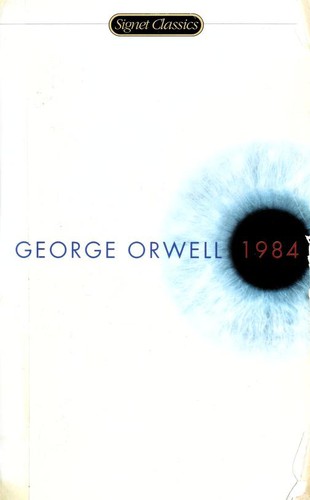
Orwell’s two greatest works, Animal Farm (1945) and Nineteen Eighty-Four (1949), secured his permanent place in world literature. Nineteen Eighty-Four, his masterpiece, is set in a dystopian future state where the ruling Party exercises total control over thought, language, and history. Its protagonist, Winston Smith, works in the Ministry of Truth rewriting historical records, yet secretly harbors forbidden desires for truth and human connection. The novel gave the world terms — Big Brother, doublethink, Newspeak, the Memory Hole — that have become indispensable to political discourse. Written while Orwell was dying of tuberculosis on the remote Scottish island of Jura, it stands as one of the most urgent and enduring warnings in the English language.
Orwell’s prose style was defined by clarity, precision, and plain-spoken moral seriousness. In his celebrated 1946 essay “Politics and the English Language,” he argued that vague, evasive writing was both a symptom and an enabler of political dishonesty. He practiced what he preached: his sentences are models of lucid English, stripped of jargon and rhetorical inflation. His essays — collected in volumes such as Shooting an Elephant and Such, Such Were the Joys — are among the finest in the language, blending autobiography, cultural criticism, and political argument with uncommon grace.
Orwell died on January 21, 1950, in London, aged forty-six, just months after the publication of Nineteen Eighty-Four. His influence on literature, political thought, and journalism has been immeasurable. The adjective “Orwellian” has entered virtually every major language as shorthand for surveillance, propaganda, and the perversion of truth by power. Generations of writers, dissidents, and political thinkers across the ideological spectrum have claimed him as a touchstone — a testament to the enduring power of one writer’s clear-eyed conscience.