Gail Honeyman
Gail Honeyman was born in 1972 and grew up in Scotland, where she was educated before earning a degree from the University of Glasgow and a master’s degree from the University of Oxford. She has worked in various roles in local government in Scotland and has remained, by the standards of major literary success, an unusually private figure—giving relatively few interviews and maintaining a low public profile even after the extraordinary success of her debut novel. This reticence is itself characteristic of a writer whose work is deeply interested in the experience of social invisibility and the inner lives of those who fall outside conventional social scripts.
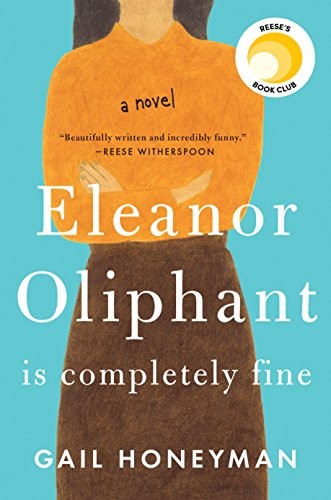
Honeyman began working on what would become her first novel while employed full-time in local government, writing in the mornings and evenings over several years. She submitted the manuscript to literary agents while still working in this day job, and the response was immediate—the novel generated substantial interest and sold to publishers in multiple countries. It was chosen as a Reese Witherspoon Book Club selection before publication, which contributed to its rapid rise to bestseller status, but the sustained enthusiasm with which readers around the world embraced the book suggests a more fundamental appeal than celebrity endorsement alone can explain.
Eleanor Oliphant Is Completely Fine (2017), available on Writers Review, is one of the most remarkable debut novels of the twenty-first century—a book whose surface simplicity and apparent lightness of touch are deceptive, concealing a carefully constructed examination of trauma, loneliness, and the slow, difficult work of human connection. The novel is narrated by Eleanor Oliphant, a young woman who works in a Glasgow office and lives a life of rigid routine and apparent self-sufficiency, concealing behind her social awkwardness a traumatic past that the novel gradually reveals. When she strikes up an unlikely friendship with a colleague named Raymond, Eleanor’s armored existence begins—cautiously, painfully, and sometimes comically—to open up. The novel is simultaneously funny, devastating, and deeply compassionate, and its treatment of loneliness, mental health, and social exclusion resonated with millions of readers who recognized something of their own experience in Eleanor’s peculiar predicament.
Honeyman’s prose voice—Eleanor’s first-person narration—is one of the great achievements of recent British fiction: precise, arch, often inadvertently funny, and shot through with a sadness that the narrator herself cannot fully acknowledge. The comedy that arises from Eleanor’s literal-mindedness and social disorientation is never cruel; it is the comedy of a person who has had to construct a self without adequate human support, whose defenses are both admirable and heartbreaking. Honeyman controls the revelation of Eleanor’s backstory with exceptional skill.
Gail Honeyman has, with a single novel, established herself as a significant figure in contemporary British fiction and demonstrated that literary ambition and popular accessibility are not opposites. Eleanor Oliphant Is Completely Fine has been adapted for film, and Honeyman continues to write. The breadth and depth of the novel’s readership—it has been embraced by book clubs, mental health advocates, and general readers alike—attests to its rare combination of formal sophistication and genuine emotional generosity.