Dava Sobel
Dava Sobel is an American science writer who transformed the market for popular science history in the 1990s with a series of short, elegant books that demonstrated that the history of scientific and technological ideas could be told with all the drama and narrative pleasure of the best commercial fiction. Born in 1947 in New York City, she worked for more than a decade as a science journalist for the New York Times before turning to long-form narrative history, where she found the form that suited her gifts. Her books are distinctive: concise, beautifully written, structured around a single problem or object, and capable of sustaining genuine suspense about outcomes that any educated reader already knows.
Her first major book, Longitude: The True Story of a Lone Genius Who Solved the Greatest Scientific Problem of His Time (1995), told the story of John Harrison, the self-taught English clockmaker who spent forty years solving the problem of determining longitude at sea — a problem that had cost thousands of lives in shipwrecks — by constructing a marine chronometer of unprecedented accuracy. The book was a sensation: a bestseller translated into dozens of languages, it demonstrated that there was a vast general audience for the history of science if it was presented with the narrative skill it deserved. Galileo’s Daughter (1999), based on the letters of Galileo’s illegitimate daughter, a nun, used the personal story of their relationship to illuminate Galileo’s scientific and spiritual life. Her book reviewed on WritersReview shows her characteristic approach in full maturity.
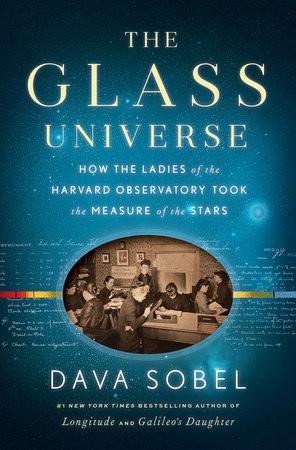
Her later books include The Planets (2005), a meditation on the solar system organized around the cultural and literary history of each planet; A More Perfect Heaven: How Copernicus Revolutionized the Cosmos (2011); and The Glass Universe: How the Ladies of the Harvard Observatory Took the Measure, Charted the Stars, and Changed Our Understanding of the Universe (2016), which recovered the stories of the women computers who analyzed photographic plates at the Harvard Observatory in the late nineteenth and early twentieth centuries and whose work was foundational to modern astrophysics. The last book reflects Sobel’s consistent interest in recovering the contributions of overlooked figures, particularly women, from the history of science.
Sobel’s prose style is her most distinctive asset: clear, precise, and capable of genuine lyricism when the material demands it, it makes the history of science feel not like the accumulation of abstract knowledge but like the passionate human endeavor it actually is. She writes about scientists and inventors as people with personalities, relationships, and obsessions, situating their work within the social and cultural contexts that shaped it. Her influence on the popular science history genre has been enormous — the wave of successful short science history books that followed Longitude owed a conscious debt to her example. She is, simply, one of the finest science writers of her generation.