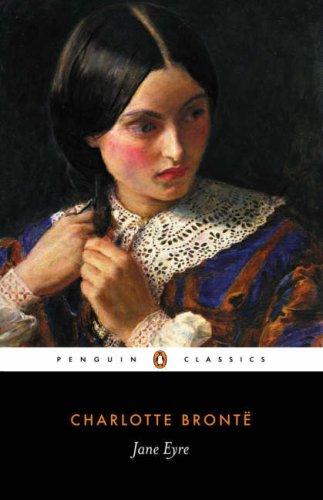
Charlotte Brontë
Charlotte Brontë was born on April 21, 1816, in Thornton, Yorkshire, England, the third of six children of an Anglican clergyman. When Charlotte was four, the family moved to Haworth, a village on the edge of the Yorkshire moors, whose wild landscape left an indelible mark on all three Brontë sisters who survived to adulthood. The early deaths of their mother and two eldest sisters drew the surviving siblings into intense creative collaboration, inventing elaborate fantasy worlds and filling notebooks with stories and histories of their imaginary kingdoms. These early exercises in world-building gave Charlotte’s imagination its distinctive sweep and Gothic intensity.
Charlotte’s formal education was intermittent and marked by hardship. She attended the Clergy Daughters’ School at Cowan Bridge, an experience so grim it inspired the Lowood Institution in Jane Eyre, and later studied in Brussels where she developed a passionate attachment to her married teacher — an experience that charged her novels with urgent emotional current. By the mid-1840s, Charlotte arranged for the joint publication of a poetry collection with her sisters under the male pseudonyms Currer, Ellis, and Acton Bell. Though it sold only two copies, the stage was set for the novels that followed.
Jane Eyre, published in October 1847, was an immediate sensation. The novel follows the orphaned Jane through her miserable childhood, her education, her employment as governess at Thornfield Hall, and her turbulent relationship with the brooding Edward Rochester. Revolutionary in its first-person confessional voice and its unflinching account of female interiority, the novel’s declaration — ‘I am no bird; and no net ensnares me’ — announced a new kind of heroine: independent, passionate, and morally uncompromising. It was an instant popular and critical success.
Charlotte’s prose is distinguished by its passionate directness, Gothic atmosphere, and psychological acuity. She renders inner life with a precision that was unprecedented in the English novel, and her social critique of class and the limited roles available to educated women is woven seamlessly into her narrative. Her later novels Shirley (1849) and Villette (1853) are now regarded as among the finest Victorian novels, with Villette considered by many critics her most psychologically complex work.
Charlotte Brontë died on March 31, 1855, aged thirty-eight. Her influence on the English novel has been incalculable. Jane Eyre is among the most beloved novels in the English language, a foundational text of feminist literary tradition, and a work whose themes of self-determination, desire, and integrity continue to resonate powerfully with readers around the world.