Caroline Fraser
Caroline Fraser is an American author and literary journalist whose work has addressed two very different but equally consequential subjects: the history and practices of Christian Science, and the life and legacy of Laura Ingalls Wilder. In both cases, she brought to her subjects the qualities that define the best contemporary nonfiction — thorough archival research, clear and elegant prose, and a willingness to complicate received narratives without losing sight of their genuine human substance. She has written for The New Yorker, The New York Review of Books, and other leading publications, and her books represent some of the most sustained and serious scholarship in American popular nonfiction of the past two decades.
Her first book, God’s Perfect Child: Living and Dying in the Christian Science Church (1999), drew on extensive documentary research and interviews to produce the most thorough account of Christian Science’s history and its consequences for believers — including those who died from treatable illnesses because the church’s teachings prohibited medical care — ever written for a general readership. The book was praised for its fairness as well as its rigor, neither sensationalizing its subject nor minimizing the genuine harm its practices had caused. It remains the definitive account of the subject.
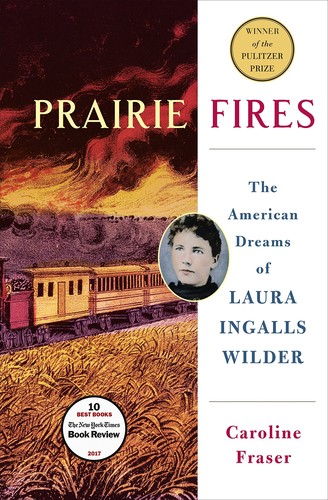
Her second book, Prairie Fires: The American Dreams of Laura Ingalls Wilder (2017), reviewed on WritersReview, won the Pulitzer Prize for Biography and the National Book Critics Circle Award for Biography. It is a biography of Laura Ingalls Wilder that is simultaneously a history of the Ingalls and Wilder families’ actual experience of the homestead era — far grimmer and more precarious than the Little House books suggest — a study of the collaborative authorship of the books (which Fraser argues were shaped significantly by Wilder’s daughter, the libertarian journalist Rose Wilder Lane), and a broader history of the political mythology of the American frontier. The book does not diminish Wilder’s achievement; it contextualizes it, revealing the gap between the idealized pioneer narrative and the historical reality of dispossession, drought, debt, and failure that the books largely elide.
Fraser’s achievement in Prairie Fires is to have written a book that is at once rigorously historical, intellectually challenging, and deeply readable — a combination that is considerably harder to achieve than it appears. She brings genuine feeling to her subject, evident affection for the children’s books while remaining clear-eyed about their ideological freight and historical distortions. The result is a work that enriches rather than replaces the experience of reading the Little House books, adding layers of complexity and historical substance that make the familiar stories newly strange and newly significant. It is among the finest American biographies of the past decade.