Blake Crouch
Blake Crouch was born in 1978 in Statesville, North Carolina, and studied English and Creative Writing at the University of North Carolina at Chapel Hill. He began his career writing crime thrillers set in the American West — the Wayward Pines trilogy, which he published independently before finding a major publisher, demonstrated his ability to build visceral suspense and his gift for the kind of escalating paranoia that keeps readers locked in. The Wayward Pines series was adapted into a television series for Fox in 2015, bringing him his first major mainstream exposure.
Crouch has described himself as a writer primarily interested in one question: what makes us who we are? That question — about identity, memory, consciousness, and the contingency of the self — drives his subsequent work, in which he deploys the tools of high-concept thriller fiction to explore genuinely philosophical territory. He is unusual among commercial thriller writers in that his plots, however propulsive, are consistently animated by ideas drawn from physics, neuroscience, and philosophy of mind.
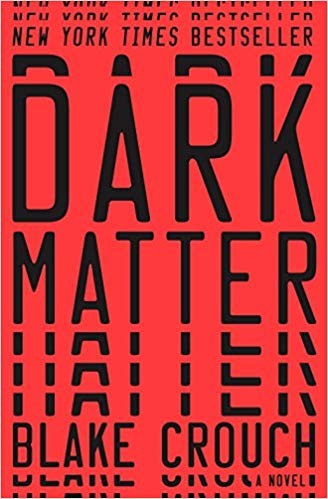
Dark Matter (2016), available on WritersReview, is his breakthrough novel and one of the most successful science fiction thrillers of the decade. When physicist Jason Dessen is abducted and wakes up in a version of his life where he made different choices, the novel launches into a multiverse adventure that is also a meditation on regret, identity, and the love that defines us. The quantum mechanics at its core is deployed with unusual rigor for a popular thriller, but the novel’s real power comes from its emotional engine: the desperate urgency of a man fighting to return to the specific version of his life that contains the people he loves. It became a global bestseller and was adapted for television by Apple TV+ in 2024.
His follow-up novels continued to push the genre envelope. Recursion (2019) explored memory reconsolidation and the catastrophic consequences of being able to alter the past; Upgrade (2022) examined genetic modification and the ethics of human enhancement. Each novel demonstrates Crouch’s ability to research deeply into cutting-edge science and transform that research into propulsive narrative accessible to a mainstream audience, without dumbing down the ideas or the stakes.
Crouch has spoken frequently about the ways in which working independently in his early career gave him a freedom to experiment that shaped his later work. He writes quickly and revises extensively, treating each novel as an opportunity to push further into territory he has not explored before. He is one of the most commercially successful science fiction thriller writers of his generation, and his work has done significant cultural work in demonstrating that serious ideas and page-turning plots are not mutually exclusive.