Bessel van der Kolk
Bessel van der Kolk was born in 1943 in The Hague, Netherlands, and came of age in a country still processing the psychological wounds of World War II and German occupation. He trained as a psychiatrist and moved to the United States, joining the faculty at Boston University School of Medicine and eventually founding the Trauma Center at Justice Resource Institute in Brookline, Massachusetts, where he served as medical director for decades.
Van der Kolk began his clinical career working with Vietnam veterans at the Boston Veterans Administration, where he observed that trauma seemed to operate differently from other psychiatric conditions—that it was stored not just in memory and narrative but in the body itself, in the nervous system’s alarm responses, in physical posture and sensation. This insight—that trauma is fundamentally a somatic as well as psychological phenomenon—became the animating principle of his research and clinical practice.
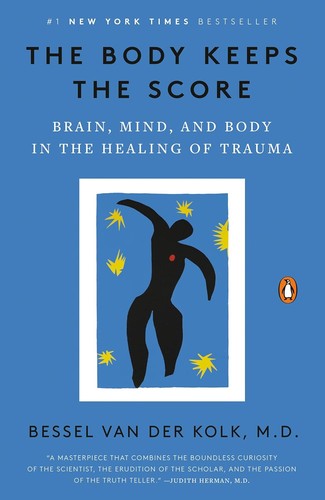
His book The Body Keeps the Score: Brain, Mind, and Body in the Healing of Trauma, published in 2014, synthesized decades of research and clinical observation into a comprehensive account of how traumatic experience alters brain function, disrupts the sense of self, and manifests in the body long after the precipitating events have passed. Drawing on neuroscience, attachment theory, and a wide range of therapeutic approaches including EMDR, yoga, theater, and neurofeedback, the book argued that effective trauma treatment must address the body’s stored responses, not just the mind’s memories. The book spent years on the New York Times bestseller list and became the most widely read book in its field.
Van der Kolk has been a prominent advocate for expanding the diagnostic categories used to understand trauma, arguing that the existing frameworks are too narrow to capture the complex developmental damage caused by chronic childhood trauma. He proposed the concept of developmental trauma disorder to describe children whose early experiences of abuse and neglect produce a distinct pattern of dysregulation and impaired development.
Bessel van der Kolk continues to teach, treat patients, and train clinicians internationally. His work has been transformative in its insistence that the body is not merely a vehicle for the mind but an active participant in psychological suffering and healing—that the path back from trauma runs not only through insight and narrative but through movement, breath, rhythm, and the gradual restoration of a sense of safety in one’s own physical being.