Arundhati Roy
Arundhati Roy was born on November 24, 1961, in Shillong, Meghalaya, India, to a Bengali Hindu father and a Syrian Christian mother from Kerala. Her parents divorced when she was young, and she was raised primarily by her mother, Mary Roy, a prominent activist who later won a landmark legal case establishing Syrian Christian women’s inheritance rights in Kerala. Roy spent her formative years in the small town of Ayemenem in Kerala, the very landscape that would become the setting for her debut novel. She studied architecture at the School of Planning and Architecture in New Delhi before turning toward writing, a shift that would prove transformative for world literature.
Roy first gained attention through her work in Indian cinema, writing screenplays during the 1980s. She spent four years writing her debut novel, drawing on childhood memories, her intimate knowledge of Kerala’s landscape and social hierarchies, and her experience of growing up between worlds. The novel was acquired by publishers in a competitive international auction before its 1997 publication, signaling the extraordinary anticipation surrounding it. The critical and commercial response exceeded all expectations.
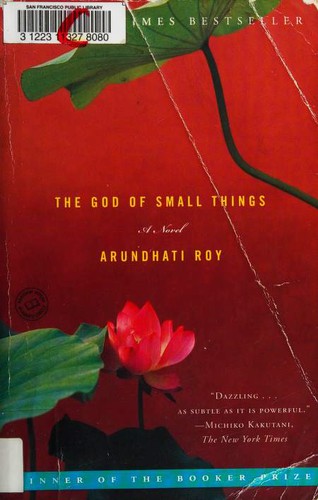
The God of Small Things is a novel of devastating beauty and structural ingenuity. It tells the story of fraternal twins Rahel and Estha and the tragedy that unfolds in their family in 1969 Kerala, rooted in the transgression of India’s caste boundaries. The novel moves backward and forward through time with the restless logic of traumatic memory, its prose lyrical and inventive. It won the Booker Prize in 1997, making Roy the first Indian woman and first Indian resident to win the award. It became an international bestseller translated into more than forty languages.
Roy’s writing style is unmistakable: dense with neologisms, sensory specificity, and recursive narrative loops. She writes with musical attention to rhythm and sound, and her sentences carry the accumulated weight of history as physical pressure on the page. After her debut, Roy turned to political essays on nuclear policy, Hindu nationalism, and the Kashmiri independence movement, establishing herself as one of the world’s most prominent public intellectuals.
Her second novel, The Ministry of Utmost Happiness, arrived in 2017 to wide acclaim. Roy’s legacy rests on a rare combination of literary artistry and civic courage. She has consistently used her platform to speak on behalf of those whom power would silence, and her work constitutes one of the most significant bodies of writing to emerge from postcolonial India.