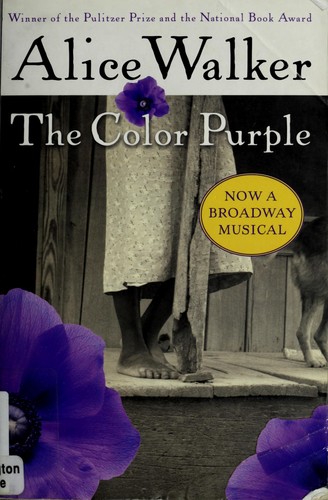
Alice Walker
Alice Walker was born on February 9, 1944, in Eatonton, Georgia, the eighth and youngest child of sharecropper parents. Her childhood in the rural American South during the era of Jim Crow segregation profoundly shaped her worldview and her art. A childhood accident left her blind in one eye, and the resulting self-consciousness drove her inward, toward books and writing. She excelled academically and won a scholarship to Spelman College before transferring to Sarah Lawrence College, where she began writing the poetry that would mark her early literary career. Her time in the Civil Rights Movement gave her a political and moral framework that would animate all of her subsequent work.
Walker’s literary development was nurtured by a formative encounter with the work of Zora Neale Hurston. Walker was instrumental in bringing Hurston back into the literary conversation, locating her unmarked grave in Florida and writing influential essays celebrating her genius. Her early novels, The Third Life of Grange Copeland (1970) and Meridian (1976), established her as an important voice in African American fiction, notable for her frank examination of domestic violence, racial injustice, and the complexities of the civil rights struggle.
It was The Color Purple, published in 1982, that brought Walker international recognition and secured her place in the literary canon. The novel, told entirely in letters written by Celie, a poor Black woman in the rural South who endures rape, abuse, and separation from her children, is a devastating and ultimately triumphant account of one woman’s journey toward self-love and liberation. Walker won the Pulitzer Prize for Fiction and the National Book Award for the novel in 1983, becoming the first Black woman to win the Pulitzer Prize for Fiction. The book was adapted into a celebrated 1985 film by Steven Spielberg and later into a Tony Award-winning Broadway musical.
Walker’s prose style in The Color Purple is distinctive for its use of African American vernacular English, a deliberate and powerful aesthetic choice that roots the narrative in a specific cultural and linguistic tradition. Her writing is lyrical, earthy, and morally engaged. Beyond fiction, Walker has been a prolific essayist and poet, and her essay collection In Search of Our Mothers’ Gardens (1983) coined the term womanism to describe a feminism that centers the experiences of women of color.
Alice Walker’s legacy is immense and multifaceted. She is one of the most important American writers of the twentieth century, a tireless advocate for social justice, and a shaping force in the development of Black feminist thought. Her work has influenced generations of writers, particularly women of color who found in her writing both a mirror and a model.