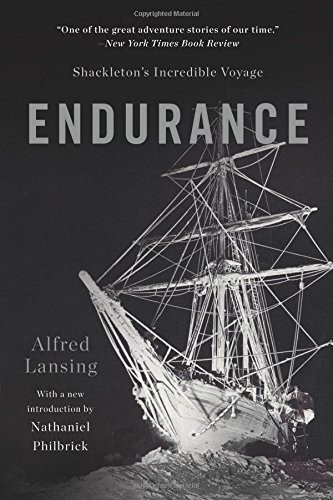
Alfred Lansing
Alfred Lansing was an American journalist and author who wrote one of the greatest survival narratives in the English language, a book that has remained continuously in print since its publication in 1959 and that has defined the literary standard for the genre. Born in 1921 in Chicago, he worked as a journalist and magazine writer before undertaking the research project that would produce Endurance: Shackleton’s Incredible Voyage, reviewed on WritersReview. He died in 1975, having written relatively little else, but the single extraordinary achievement of Endurance secured his permanent place in the literature of exploration and survival.
Endurance tells the story of Ernest Shackleton’s Antarctic expedition of 1914–1917, during which his ship was trapped in pack ice and eventually crushed, leaving the twenty-eight-man crew stranded on the ice for months before they made their extraordinary escape by open boat across nearly nine hundred miles of the world’s most dangerous ocean to South Georgia Island. Lansing conducted the research for the book in the early 1950s, interviewing most of the surviving crew members and drawing extensively on their diaries and photographs. The result is a work of narrative nonfiction that achieves the sustained tension and emotional investment of the finest fiction, while remaining scrupulously accurate to the documented record.
What makes Endurance extraordinary, beyond its subject matter, is Lansing’s skill in building and sustaining tension across a narrative whose outcome every reader already knows — all twenty-eight men survived — while simultaneously making that survival feel genuinely uncertain on every page. He achieves this through the specificity of his detail, the vividness of his characterizations of the individual crew members, and his ability to convey the physical reality of cold, hunger, fear, and the extraordinary endurance of the human body and spirit under conditions of extreme stress. The book has remained in print because each generation of readers discovers in it not just a historical adventure but a meditation on what human beings are capable of when everything has been stripped away.
The book’s influence on subsequent adventure writing has been considerable. Virtually every major survival narrative of the past half century — from Jon Krakauer’s Into Thin Air to Sebastian Junger’s The Perfect Storm — owes a debt to the model Lansing established: the reconstruction from firsthand accounts of a historical event of extreme physical danger, told with journalistic accuracy and novelistic skill. His achievement was recognized by the centenary of the Shackleton expedition in 2014–1917, which brought the book to a new generation of readers and confirmed its status as a permanent classic of the literature of adventure and survival.