
Poetry as Survival
Rachel McKibbens’s blud is a book about what it costs to survive: the particular costs of surviving a violent childhood, mental illness, addiction, and the specific violences visited on women and on bodies marked as other. It is not a comfortable book. It does not offer the reader reassurance or the flattering illusion that reading about suffering creates understanding. What it offers instead is something rarer and more valuable: the experience of language working at full intensity in the service of truth that would be otherwise uncontainable. McKibbens is one of the most technically accomplished poets in contemporary American writing, and blud is her fullest achievement.
The Transformation of Trauma
blud engages directly with childhood abuse, intergenerational trauma, and the inherited wounds of McKibbens’s family history. But calling it “trauma poetry” is to misunderstand what McKibbens actually does. She is not writing therapeutic narratives or confessional revelation for its own sake. She is doing something more formally ambitious: using the specific resources of poetry – compression, sonic architecture, the charged gap between lines – to render experiences that resist prose narration. The poems are crafted with extraordinary precision, and that precision is itself an argument: that these experiences deserve the full resources of the art, that the poet and her subject command the highest technical attention.
The Title and the Body
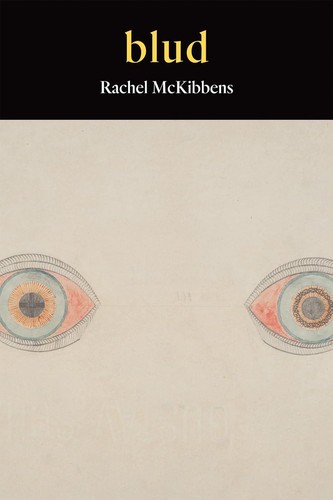
The title “blud” – an alternate spelling that carries both the intimacy of slang and the ancient weight of the word – signals the collection’s concern with the body and its inheritances. Blood is lineage and wound, is what binds a family together and what flows when that binding breaks open. McKibbens is interested in what the body carries that the mind cannot or will not acknowledge, in the way trauma lives in the flesh before it can be articulated in language. The poems often begin in the body and move outward toward meaning, rather than beginning with meaning and moving toward illustration.
Anger as Form
The collection has a quality of controlled fury that is one of its most distinctive features. McKibbens does not perform or aestheticize her anger – she deploys it as formal energy, as the pressure that gives the poems their structural tension. The poems about her mother, about the specific shape of her childhood damage, have a quality of precision that is inseparable from their anger: these are not wild accusations but carefully documented testimonies. The precision of the language is itself a form of justice.
Dark Humor and Survival
blud is also, at unexpected moments, funny – darkly, uncomfortably funny in the way that survivors of serious things often are. McKibbens has a gift for the joke that lands in the wrong place, that makes you laugh and then makes you ashamed of laughing and then makes you understand something you hadn’t before. This humor is not a defense mechanism decorating the surface of the poems but an integral part of their argument: that survival is not the same as recovery, that people who have been through serious things remain full, complex, often ridiculous human beings who also like to laugh.
The Formal Architecture
McKibbens’s forms are various and controlled throughout the collection. She works in long free-verse lines, in short compressed lyrics, in lists and catalogs, in what might be called prose-poem structures if prose could carry this kind of sonic charge. The white space on the page is always doing something – marking pauses that are not silence but breath, creating the visual shape of speech interrupted and resuming. The collection reads beautifully aloud, which is not surprising: McKibbens is also a celebrated spoken-word performer, and the oral qualities of her work are integrated into rather than separate from its literary achievement.
Verdict
blud is one of the most important poetry collections published in the last decade, a book that does what only the best poetry can do: render unspeakable experience in language so precise and beautiful that the reader is changed by it. McKibbens is a necessary voice, and this is her necessary book.
What is blud about?
blud is a collection of poems about survival – specifically about surviving childhood abuse, intergenerational trauma, mental illness, and addiction. McKibbens draws on her own family history to create a collection that is simultaneously personal testimony and formal achievement, angry and tender, brutal and beautiful. The title (a variant spelling of “blood”) points toward the book’s central concerns: family inheritance, the body, and what we carry in our blood whether we choose to or not.
Is blud appropriate for sensitive readers?
blud deals directly with childhood abuse, mental illness, addiction, and violence. It is not gratuitously graphic, but it is unflinching, and readers with personal histories involving abuse or trauma should approach it knowing what they are entering. The book is not, however, retraumatizing in the way that less skillfully crafted work can be – McKibbens’s formal control creates a kind of protective container around the material. Many readers with trauma histories have found the collection affirming rather than retraumatizing, but individual responses will vary.
Who is Rachel McKibbens?
Rachel McKibbens is a Mexican-American poet and playwright based in New York. She is the founder of the Pink Door Women’s Writing Retreat, a retreat for women of color. She is widely known in the spoken-word and slam poetry communities, where she has won multiple national championships, as well as in the literary poetry community. blud is her third full-length collection from Copper Canyon Press.
What is the significance of the alternate spelling “blud”?
The alternate spelling is at once more intimate and more ancient than the standard “blood” – it carries the weight of slang (as a term of address in certain communities, meaning close friend or family) while also evoking the Germanic roots of the English word. It disrupts the automatic recognition that the standard spelling would allow, making the reader pause at a word they have seen thousands of times. This defamiliarization is characteristic of McKibbens’s approach: she makes familiar language strange in order to make familiar experiences newly visible.
How does blud relate to McKibbens’s spoken-word background?
The collection is deeply shaped by McKibbens’s spoken-word background – the poems are designed to be heard as well as read, and their sonic architecture (the sound patterns, the breath pauses, the rhythmic structures) is central to their effect. But they are also fully accomplished as written poems and do not read as transcribed performances. McKibbens is one of the few poets who has successfully bridged the spoken-word and literary poetry communities, and blud is one of the clearest examples of how these traditions can enrich rather than compromise each other.
What is the Pink Door Women’s Writing Retreat?
The Pink Door is a retreat founded by McKibbens specifically for women of color, providing a week-long intensive writing experience in a community of peers. It has been running since 2010 and has supported the development of numerous poets who have gone on to significant literary careers. The retreat reflects McKibbens’s commitment to community building and to creating spaces where poets who are underrepresented in the mainstream literary world can do their work.
How does blud handle mental illness?
Several poems in the collection engage directly with McKibbens’s experience of mental illness, which she has written and spoken about publicly. The poems refuse both the romanticization and the stigmatization of mental illness that are common in both literary and popular culture – they insist on the specificity and the difficulty of the experience without aestheticizing it or using it as a marker of poetic sensibility. This refusal of easy narrative is characteristic of the collection as a whole.
Is blud connected to McKibbens’s other collections?
blud is McKibbens’s third full-length collection from Copper Canyon Press, following Into the Dark and Laughing (2013) and Pink Elephant (2009). The earlier collections share many of the same preoccupations and can be read alongside blud as part of a sustained engagement with family, survival, and the body. blud is generally considered her most technically accomplished work, but all three collections are worth reading for a full picture of her development as a poet.
Book Details
- Title
- blud
- Author
- Rachel McKibbens
- Genre
- Poetry
- Publisher
- Copper Canyon Press
- Year Published
- 2017
- Pages
- 88
- ISBN
- 9781556595240
- WritersReview Rating
- 5.0 / 5