Lois Lowry
Lois Lowry was born on March 20, 1937, in Honolulu, Hawaii. Her father was an Army dentist, and like many military children she grew up moving between postings in Pennsylvania, New York, and Japan. This childhood of displacement and adaptation gave her an early sensitivity to difference, belonging, and the ways in which societies construct and enforce conformity, themes that would animate her finest work. She studied at Brown University before withdrawing to marry, and later completed a degree in English literature at the University of Southern Maine. She worked as a freelance journalist and photographer before turning seriously to fiction writing in her late thirties.
Lowry’s early novels were realistic fiction for young readers, including the Anastasia Krupnik series, which won her a devoted following for its warmth and humour. Her reputation grew considerably with Number the Stars (1989), a historical novel set in occupied Denmark during World War II about a young girl who helps her Jewish friend’s family escape to Sweden, which won the Newbery Medal and introduced Lowry to a wider audience as a writer capable of engaging children with the gravest subjects of human history.
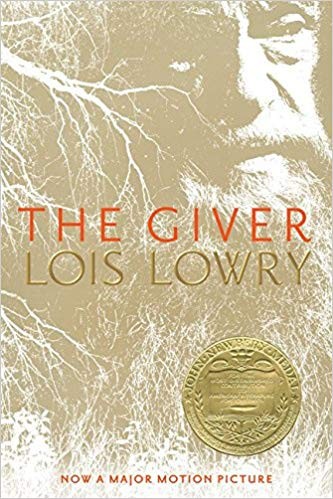
The Giver (1993) is her masterwork. Set in a future society that has eliminated pain and conflict through the systematic suppression of memory, colour, music, and choice, the novel follows twelve-year-old Jonas as he is assigned the role of Receiver of Memory and begins to understand everything his society has sacrificed in the name of Sameness. The book’s devastating final ambiguity has been debated by readers and critics for decades. The Giver won the Newbery Medal in 1994 and became one of the most taught novels in American schools, as well as one of the most challenged, because of its unflinching engagement with euthanasia, totalitarianism, and individual conscience.
Lowry completed a quartet of loosely connected novels in the same world: Gathering Blue (2000), Messenger (2004), and Son (2012). A film adaptation of The Giver was released in 2014. Her prose is notable for its restraint and precision: she trusts young readers to engage with moral complexity without didacticism. Lowry has received two Newbery Medals, the Margaret A. Edwards Award for lifetime contribution to young adult literature, the National Jewish Book Award, and the Regina Medal. She is widely regarded as one of the most important writers for children and young adults in American literary history.