
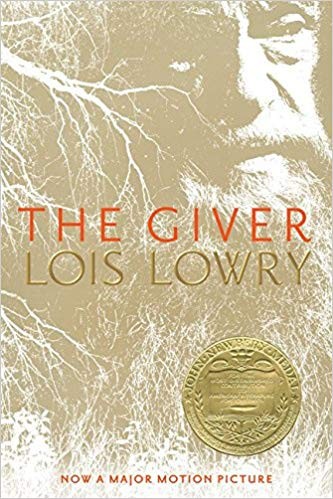
The Giver
Houghton Mifflin Harcourt · 1993 · 180 pages
ISBN: 9780544336261
Review Editor
Hannah Bright
Summary
Jonas lives in the Community, a small, orderly settlement in what appears to be a distant future. Generations ago, the founders made a calculated trade: they surrendered pain and conflict, along with color, music, strong emotion, and personal choice, in exchange for safety and equality. The result is a place without war, without hunger, without grief. It is also a place without love in any full emotional sense, and without the memory of a world that once held all of those things.
At twelve, children receive their permanent life assignments at the annual Ceremony of Twelve. Jonas approaches his ceremony with the usual anxiety, aware in some vague way that he does not quite fit the available categories. He expects a routine placement. What he receives instead is the rarest designation the Community ever gives: Receiver of Memory. He will train under the current Receiver, a solitary old man who has spent his life carrying something no one else in the Community possesses. That something is the entire accumulated record of human experience, stretching back to the time before Sameness.
The training begins with small, astonishing gifts: the sensation of snow, the rush of a sled on a hill, the unfamiliar pleasure of sunburn. It continues into darker territory — war, starvation, the grief of a dying animal, the weight of an old wound. Jonas begins to understand that the world around him is not the only world that has ever existed, and that the people he loves cannot see what they have given up. When he learns what the word “release” actually means in the language of the Community, the path forward closes behind him.
Character Arcs and Development
Jonas begins the novel as a careful, conscientious boy who trusts the Community’s systems. He notices small anomalies — a flicker of something passing over an apple, a quality in his friend Fiona’s hair that seems to shift in certain light — but his instinct is to question himself rather than the world. Lowry draws this character precisely. Jonas is not a natural rebel. He is someone who wants to do the right thing, which makes his eventual transformation both more credible and more difficult to read. The reader sees the cost of what he has to give up to become the person he becomes.
Each memory the Giver transfers to Jonas adds texture to a world he has always experienced as flat. He learns the word for what he sees in the apple: red. He receives the memory of a Christmas gathering with four generations of a family around a table, opening gifts and laughing, and feels an emotion so unfamiliar he cannot name it until the Giver provides the word: love. These moments are not sentimental. They arrive with the weight of something that has been absent for a very long time, and Jonas carries them with appropriate seriousness.
The Giver himself is among the great supporting characters in young adult fiction. He is weary, isolated, and burdened in ways that have no outlet, because no one around him can share or even understand what he carries. His relationship with Jonas becomes genuinely reciprocal: he needs to transfer these memories as much as Jonas needs to receive them. Lowry resists any pull toward a simple wise-mentor archetype. The Giver has spent decades making compromises, and the novel asks him and the reader to reckon with the limits of those compromises.
Jonas’s father deserves particular attention. He is warm, patient, fond of his children, and one of the novel’s most genuinely disturbing characters. In a scene that arrives without warning, he euthanizes a newborn infant with the calm precision of someone performing a routine administrative task, then returns home for dinner. He has no framework for understanding what he has done. Lowry refuses to let readers hate him, which is where the book’s deepest moral argument lives. The horror is not cruelty. The horror is its absence.
Pacing
The first third of the novel moves with deliberate slowness. Lowry describes the Community’s daily rituals in careful detail: the morning sharing of dreams, the evening sharing of feelings, the precision with which citizens follow rules and make confessions. For a reader who has not yet questioned the world being built, this section can feel static. That quality is the whole point. The Community presents itself as safe and sufficient, and the prose earns that impression before it takes it apart.
The training sequences change the rhythm fundamentally. Each memory Jonas receives introduces more sensation, more warmth, more complexity, and the narrative mirrors this shift. Sentences that started flat and procedural begin to carry more weight. The contrast builds incrementally rather than arriving as a sudden gear change, which is exactly how Lowry intends it. By the midpoint, the world of the novel feels entirely different from how it felt on the first page, and readers may not have noticed the transition because Jonas did not notice it either.
The final act is tense in a spare, quiet way. There are no elaborate chase sequences or action set pieces. The tension comes entirely from Jonas carrying knowledge that no one around him can share, watching the clock tick down on Gabriel’s life, while the Community continues its careful, oblivious routines around him. The escape itself is brief, harrowing, and stripped of any reassurance. The final pages ask readers to remain with uncertainty rather than offering resolution, which is the only honest ending available for this particular story.
Deeper Thematic Exploration
The novel’s central argument concerns what happens to humanity when the capacity for suffering is surgically removed. Lowry does not make this an easy question. The Community functions. Its citizens are fed, housed, educated, and protected from violence, grief, and the instability of strong emotion. Children receive care. The elderly receive honor. The system works by its own metrics, and the people who designed it seem to have genuinely believed they were building something better than what came before.
What they could not anticipate, or chose not to examine, is that human beings require the full range of experience to understand the meaning of their own actions. Jonas’s father can kill a newborn without cruelty because he has never mourned a child he loved. He cannot recognize what he has done as a loss because grief, in its full weight, has been removed from the vocabulary available to him. The Community has not made its citizens evil. It has made them incomplete, and that incompleteness enables genuine atrocity to proceed with a pleasant administrative face.
The treatment of memory sets this novel apart from other dystopian fiction written for young readers. Memory in The Giver is not private or merely personal; it is collective and human. The Receiver carries all of it, which means the Community’s stability depends on concentrating the full weight of the past in one isolated individual who cannot share what they know. This arrangement is more fragile than anyone acknowledges. When the previous Receiver’s apprentice died, the memories she had already received scattered back into the general population and caused chaos. The suppression of the past is not a permanent solution; it is a long, slow disaster waiting for the right conditions.
The novel also addresses eugenics and bodily control without announcing that it is doing so. The Community culls those who do not meet its standards: infants who fail to thrive, elderly residents who have completed their useful years, citizens whose behavior disrupts the social order. All of these are described as “release” in language that is gentle and even tender. Lowry trusts readers to feel what the word conceals. The moment when Jonas finally sees what release actually means stands as one of the most carefully constructed revelations in the genre.
Style and Voice
Lowry writes in close third-person throughout, staying tightly within Jonas’s perspective and allowing the narrative register to shift with his understanding. The opening chapters carry an almost clinical quality, adopting something of the Community’s own precise, regulation-minded language. Characters speak in careful sentences. Emotions get reported and then dutifully shared at the evening meal. The prose fits the world it describes so naturally that readers move into it without resistance.
As the memories accumulate, the language opens. Descriptions grow richer, sensory details find their place, and the gap between Jonas’s interior life and the flat surface of Community routine becomes increasingly visible on the page. Lowry manages this tonal shift with discipline, keeping it slow and incremental rather than announced. The effect is that readers feel the warming of the world from the inside, which is precisely the experience Jonas has.
The novel is strikingly economical for what it accomplishes. At around 180 pages, there is no surplus material. Every scene carries weight. Every detail pays off. The book’s compression is one of its greatest strengths, because it never gives readers enough distance to approach the world’s logic skeptically. They are always still absorbing the last emotional beat when the next one arrives.
The ending has generated sustained debate since the novel’s first publication in 1993. Jonas descends toward warmth, light, and music in a final passage that reads simultaneously as hope and as a description of dying. Lowry made the ambiguity intentional and held to it for years before extending the story in three companion novels. The ending works on its own terms as the portrait of a boy who chooses to believe in something that cannot be confirmed, which is exactly what the novel has been building toward from the first page.
Verdict
The Giver earns its place on every curriculum list and in every canonical ranking not through the weight of nostalgia but through the quality of what it does. It makes a serious philosophical argument about memory, freedom, and the cost of safety through the specific experience of one twelve-year-old boy, without condescension and without shortcuts. Lowry trusts her readers to handle difficult material, and that trust is among the most important things the novel communicates.
There are legitimate criticisms. The Community’s mechanisms require a degree of logical good faith that adult science fiction readers may find harder to extend. A few supporting characters remain underdeveloped. Readers who approach it after encountering more technically ambitious dystopian fiction may find the world-building comparatively spare. These are minor frictions against a novel that succeeds at its actual project: giving young readers a framework for thinking about conformity, memory, and humanity that they will carry into the rest of their reading lives and beyond.
For readers new to dystopian fiction, The Giver is the natural starting point. For readers who encountered it as a school assignment and remember it as a book they were made to read, it rewards a voluntary return visit with considerably more to offer than most books written for adults. Lois Lowry built something that lasts.
What is The Giver about?
The Giver follows Jonas, a twelve-year-old boy in a future society called the Community, where all pain, conflict, and strong emotion have been eliminated through a system called Sameness. When Jonas is assigned the rare role of Receiver of Memory, he begins training under an old man who holds all of humanity’s historical memories. As Jonas receives those memories, he discovers the full truth about the world he lives in and must decide what to do with what he has learned.
What age is The Giver appropriate for?
The Giver is commonly taught in grades 6 through 8 and is generally considered appropriate for readers aged 11 and up. The novel deals with themes of death, euthanasia, and social control in ways that are handled with care rather than graphic detail, but parents and educators may want to discuss those themes with younger readers. Many adults find it equally rewarding on re-read.
Did The Giver win any awards?
Yes. The Giver won the 1994 Newbery Medal, the most prestigious award in American children’s literature, given by the American Library Association for the most distinguished contribution to children’s books. It also received the 1994 Regina Medal, the 1996 William Allen White Award, Boston Globe-Horn Book Honor recognition, and listings as an ALA Notable Children’s Book and School Library Journal Best Book of the Year.
Is The Giver part of a series?
The Giver is the first book in a loose quartet of novels collectively known as The Giver Quartet. The companion novels are Gathering Blue (2000), Messenger (2004), and Son (2012). The books share a connected universe but can be read independently. Many readers encounter only The Giver and consider it a complete standalone novel, which is how Lowry originally conceived it.
How long is The Giver?
The original edition of The Giver runs approximately 179 to 180 pages, making it a relatively short novel that most middle-grade readers can finish in a few sittings. Some later editions, including illustrated and graphic novel adaptations, have different page counts. The brevity is part of the book’s strength: Lowry uses every page and wastes nothing.
Is The Giver banned in schools?
The Giver has been one of the most frequently challenged books in American libraries and schools since its publication. It ranked among the American Library Association’s top challenged books of the 1990s and 2000s. Challenges have typically cited its themes of euthanasia, infanticide, and dystopian violence. Lois Lowry has stated that most people who call for its banning change their position after reading the full novel rather than descriptions of it.
Is there a film adaptation of The Giver?
Yes. A film adaptation was released in August 2014, directed by Philip Noyce and starring Jeff Bridges as the Giver, Brenton Thwaites as Jonas, and Meryl Streep as the Chief Elder. Bridges had been developing the project for nearly two decades. The film made several significant changes from the novel, aging up the protagonist and adding more conventional action elements. Reader responses to the adaptation have been mixed.
What are the main themes of The Giver?
The Giver explores the relationship between memory and moral understanding, arguing that a society that cannot feel cannot recognize the meaning of its own actions. It examines the cost of conformity and safety when those values require eliminating individual freedom, emotional depth, and the ability to make genuine choices. The novel also engages with questions of bodily autonomy, institutional control, and the responsibilities that come with knowledge that others do not share.
Book Details
- Title
- The Giver
- Author
- Lois Lowry
- Genre
- Children's
- Publisher
- Houghton Mifflin Harcourt
- Year Published
- 1993
- Pages
- 180
- ISBN
- 9780544336261
- WritersReview Rating
- 4.4 / 5