Truman Capote
Truman Capote was born Truman Streckfus Persons on September 30, 1924, in New Orleans, Louisiana. His parents divorced when he was four and he spent years with relatives in Monroeville, Alabama, where he formed a pivotal friendship with neighbour Nelle Harper Lee, the future author of To Kill a Mockingbird. A precocious child who taught himself to read and write at an exceptionally young age, Capote resolved to become a writer by his teenage years. He dropped out of school at seventeen and secured a job as a copy boy at The New Yorker.
His literary career began with stunning early work. His debut novel Other Voices, Other Rooms (1948), published when he was just twenty-three, established him as a major American voice. Breakfast at Tiffanys (1958), with its unforgettable protagonist Holly Golightly, became one of the defining novellas of the postwar era. Throughout the 1950s Capote was a celebrated fixture of New York society, as famous for his wit and socialite friendships as for his prose. He was a consummate stylist, writing in a voice at once honeyed and precise, capable of great tenderness and devastating irony.
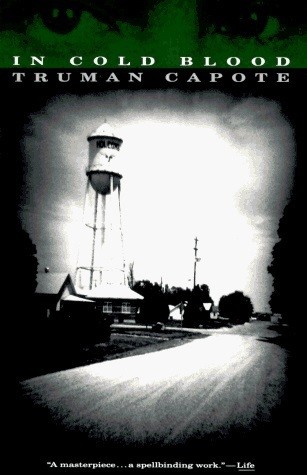
The work that would define his legacy was In Cold Blood, published in 1966 after more than five years of immersive reporting. The book documented the 1959 murders of the Clutter family in Holcomb, Kansas, and the subsequent investigation, trial, and execution of the two killers. Capote, accompanied by Harper Lee, travelled to Kansas repeatedly, conducting hundreds of interviews and developing a controversial close relationship with one of the killers. The result was what Capote called a nonfiction novel, applying all the techniques of literary fiction to factual events with unprecedented psychological depth. In Cold Blood was serialised in The New Yorker before publication and is widely credited with inaugurating the genre of literary journalism in American letters.
The triumph of In Cold Blood was followed by a long decline marked by alcoholism and drug dependency. His unfinished novel Answered Prayers caused a scandal by fictionalising the secrets of his society friends, destroying many of his closest relationships. He died in Los Angeles on August 25, 1984, at fifty-nine. Capote received the Edgar Award and the O. Henry Award, and his influence on American prose style and the development of literary nonfiction remains incalculable.