
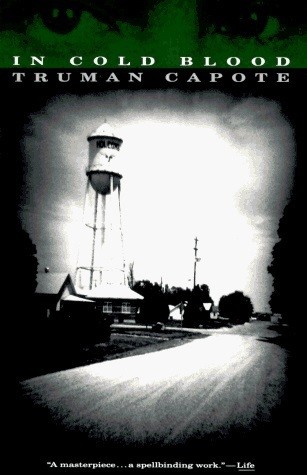
In Cold Blood
Vintage · 1965 · 343 pages
ISBN: 9780679745587
Review Editor
James Voss
In November 1959, four members of the Clutter family were murdered in their farmhouse in Holcomb, Kansas. Six years later, Truman Capote published the account of those murders, their investigation, and the execution of the two men convicted of the crime — and in doing so produced a book that changed what nonfiction could do. Capote spent years in Kansas, interviewing townspeople, investigators, and the killers themselves, and the result is a narrative that reads with the propulsion of a novel while remaining, in its essential facts, reportage. The question of whether it is fully one or the other has never been settled, which is part of what keeps it alive.
Character Arcs
The Clutter family is rendered with care and precision — Herb, Nancy, Kenyon, Bonnie, each given enough individual life that their deaths register as specific losses rather than abstract tragedy. But the book’s most sustained characterization goes to Perry Smith, one of the two killers. Capote spent more time with Perry than with Dick Hickock, and it shows: Perry emerges as a figure of genuine complexity — damaged, gifted, self-mythologizing, capable of violence and tenderness within the same person. Dick is rendered more flatly, as a con man’s surface without much below it. Whether this asymmetry reflects reality or Capote’s affections has been debated ever since. The investigators and townspeople are drawn sharply in brief strokes, and the detective Alvin Dewey becomes something close to a surrogate protagonist in the book’s later sections.
Pacing
Capote structures the book in four sections, braiding the Clutters’ last day with the killers’ approach, then separating to follow the investigation on one track and the killers’ flight on another before bringing them together at the arrest. The technique generates suspense the reader may resist — we know the outcome — but it works because the suspense is emotional rather than factual. The final section, covering the years between conviction and execution, is the book’s most quietly devastating. It moves slowly, accumulating the weight of time and waiting, and ends with a scene in the graveyard that has the quality of fiction so polished it can’t quite be believed as fact.
Thematic Depth
In Cold Blood is partly about the randomness of violence — the Clutters were selected almost arbitrarily, victims of a false rumor about a safe that didn’t exist. It is also about the machinery of American justice: what capital punishment does to the people who administer it, how the legal system processes men whose crimes are horrific and whose minds are perhaps broken. Capote doesn’t let Perry’s psychological complexity excuse the murders, but he refuses to let the execution feel like justice, either. The book sits with that discomfort rather than resolving it, which is why it has sustained serious reading for sixty years.
Style and Voice
Capote’s prose is precise, controlled, and occasionally beautiful in a way that feels slightly at odds with the material — which is exactly the point. The gap between the elegance of the writing and the brutality of the events creates a persistent, productive tension. His dialogue is rendered with ear-perfect specificity, and the book’s famous “non-fiction novel” designation points to its most striking quality: it reads as if everything was witnessed rather than reconstructed, giving it an intimacy that conventional journalism can’t achieve. Whether that intimacy involved distortion or invention is a legitimate question. What it produces on the page is indisputable.
Verdict
In Cold Blood remains one of the essential American books of the twentieth century — not because it is definitive true crime, but because it asks questions about violence, justice, empathy, and storytelling that it refuses to answer tidily. Capote’s portrait of Perry Smith is one of the great acts of literary attention in American nonfiction, and the structural achievement of braiding multiple timelines into a coherent, propulsive whole has never been bettered in the genre. Its ethical problems are real and worth discussing. So is its power.
Rating: 4.4 out of 5
Book Details
- Title
- In Cold Blood
- Author
- Truman Capote
- Genre
- Mystery & Thriller
- Publisher
- Vintage
- Year Published
- 1965
- Pages
- 343
- ISBN
- 9780679745587
- WritersReview Rating
- 4.4 / 5