Simon Sinek
Simon Oliver Sinek was born on October 9, 1973, in Wimbledon, London, and grew up in various countries as a result of his family’s relocations, including time in England, Hong Kong, South Africa, and the United States. He earned a bachelor’s degree in cultural anthropology from Brandeis University in Massachusetts and later studied law at City University London before deciding that law was not his calling. He worked in advertising in New York for several years before launching his own consulting practice focused on leadership, organizational culture, and the communication of purpose.
The concept that made Sinek famous emerged from a period of personal and professional difficulty in his late twenties. Feeling uninspired and disengaged from his work, he began investigating what drove truly inspired leaders and organizations to achieve what others could not. The framework he developed, which he called the Golden Circle, identified three concentric questions—Why, How, and What—and argued that most organizations and communicators work from the outside in (starting with what they do) while the most inspiring leaders work from the inside out, starting with a clear articulation of why they exist and what they believe.
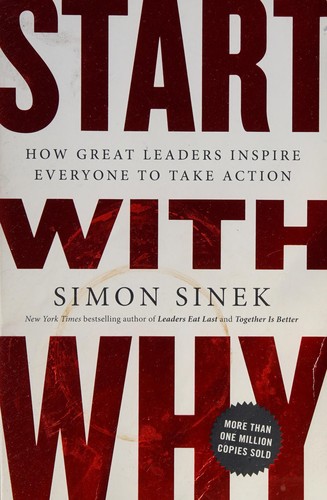
He presented this framework in a TED Talk in 2009 that became one of the most-watched TED presentations of all time, with well over sixty million views. His first book, Start With Why: How Great Leaders Inspire Everyone to Take Action, published in 2009, expanded these ideas into a full-length argument that purpose-driven leadership produces more loyal employees, more devoted customers, and more durable organizations. Drawing on examples from Apple, Martin Luther King Jr., and the Wright Brothers, the book offered an accessible explanation for why some leaders and companies command loyalty that transcends product quality or price.
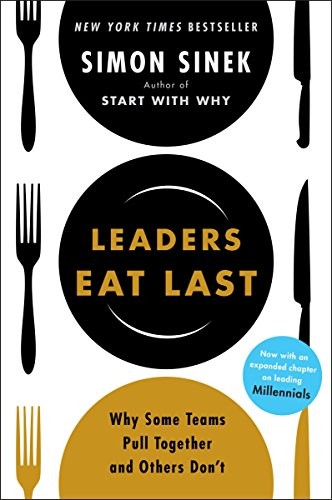
Sinek followed Start With Why with Leaders Eat Last: Why Some Teams Pull Together and Others Don’t (2014), which drew on evolutionary biology and neuroscience to argue that great leaders create environments of psychological safety in which people feel protected enough to take risks and give their best; and The Infinite Game (2019), which adapted James Carse’s philosophical distinction between finite and infinite games to argue that the most successful organizations play for long-term flourishing rather than short-term competitive advantage.
Simon Sinek continues to speak, write, and consult from New York, where he has built an organization, SinekPartners, that works with companies and governments on leadership development. His work occupies the popular end of leadership literature, prioritizing inspiration and broad accessibility over academic rigor, but his influence on how organizations think about purpose, culture, and communication has been substantial and lasting.