Erik Larson
Erik Larson was born on January 3, 1954, in Brooklyn, New York, and grew up on Long Island. He studied Russian history at the University of Pennsylvania and earned a master’s degree in journalism from Columbia University. He worked for years as a staff writer and correspondent for newspapers and magazines including the Wall Street Journal, Time, and The Atlantic, developing the long-form narrative skills and appetite for archival research that would define his work as a book author.
Larson’s signature approach—the narrative nonfiction form in which historical events are rendered with the pacing, character development, and scene-setting of literary fiction, while maintaining strict factual fidelity to documented sources—was already present in his early books but reached its fullest expression in The Devil in the White City: Murder, Magic, and Madness at the Fair That Changed America, published in 2003. The book intertwined two parallel narratives set during the 1893 World’s Columbian Exposition in Chicago: the heroic story of architect Daniel Burnham’s effort to build the fairgrounds against nearly impossible odds, and the chilling story of serial killer H.H. Holmes, who used the chaos and anonymity of the fair to lure and murder victims in his purpose-built hotel. The book spent more than two years on the New York Times bestseller list, sold millions of copies, and transformed narrative nonfiction as a commercial and literary genre.
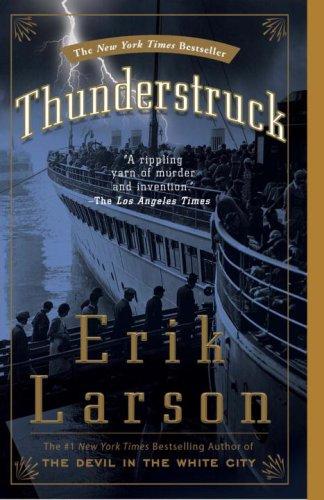
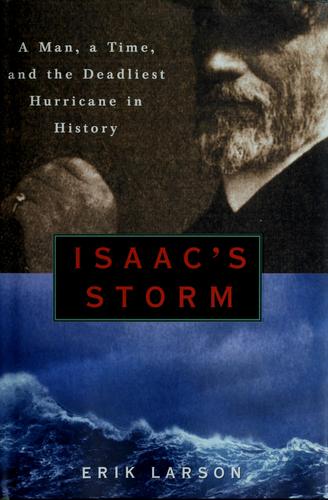
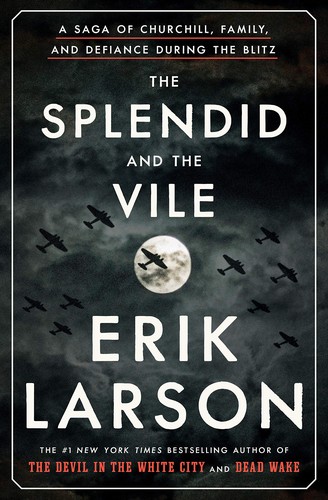
Larson’s subsequent books applied the same method to other high-stakes historical episodes: Isaac’s Storm (1999) reconstructed the 1900 Galveston hurricane through the experience of a single meteorologist; Thunderstruck (2006) intertwined the invention of wireless telegraphy and a celebrated murder case in Edwardian London; In the Garden of Beasts (2011) told the story of America’s first ambassador to Hitler’s Germany through the diaries and letters of Ambassador William Dodd and his daughter Martha; Dead Wake (2015) reconstructed the sinking of the Lusitania in 1915; and The Splendid and the Vile (2020) portrayed Winston Churchill and his household during the London Blitz of 1940-41.
His method involves years of archival research—reading diaries, letters, contemporary newspaper accounts, government documents, and personal papers—to reconstruct the inner lives and moment-to-moment experiences of historical figures. Larson has spoken extensively about his commitment to staying within the documentary record, never inventing dialogue or interiority but drawing those elements from what figures actually wrote or said. This scrupulous approach gives his books both their novelistic quality and their credibility as history.
Erik Larson lives in New York City and continues to produce meticulously researched narrative histories that bring pivotal moments of the past vividly into the present. His work has demonstrated that there is a substantial audience for history that takes storytelling as seriously as scholarship—readers who want to understand the past not just analytically but experientially, through the minds and senses of the people who lived it.