Mark Kurlansky
Mark Kurlansky is an American journalist, food historian, and author whose books have explored the surprising ways that single commodities — fish, salt, paper, oysters — have shaped the course of human civilization. Born on December 7, 1948, in Hartford, Connecticut, Kurlansky studied theater at Butler University before embarking on a career in journalism that took him across the Americas, Europe, and beyond. He has worked as a foreign correspondent and has written for publications including the Chicago Tribune, Los Angeles Times, and the Philadelphia Inquirer.
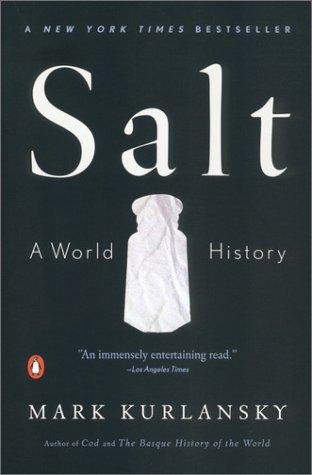
His breakout book, Cod: A Biography of the Fish That Changed the World (1997), used the Atlantic cod as a lens through which to view centuries of maritime history, European expansion, and ecological crisis. The book demonstrated that a single species could be the pivot around which entire economies, cultures, and empires turned. It was followed by Salt: A World History (2002), which applied the same approach to one of the most fundamental commodities in human existence, tracing salt’s role in everything from ancient food preservation to the financing of wars. Both books became international bestsellers and established Kurlansky as the foremost practitioner of what might be called commodity history.
He has continued this approach with Paper: Paging Through History (2016), Milk!: A 10,000-Year Food Fracas (2019), and Salmon: A Fish, the Earth, and the History of Their Common Fate (2020). Kurlansky has also written extensively on Basque culture, Pacific Islander history, and the history of nonviolence, as well as producing fiction and children’s books. His work on 1968: The Year That Rocked the World (2004) applied his narrative gifts to political and social history.
Kurlansky’s enduring achievement is to have shown that the most ordinary things — the foods we eat, the minerals we mine, the animals we harvest — carry within them the entire sweep of human history. His books combine meticulous research with engaging storytelling and a genuine curiosity about the overlooked corners of the past.