Thomas S. Kuhn
Thomas S. Kuhn was an American philosopher, historian, and sociologist of science whose work fundamentally transformed how scholars and the public understand the nature of scientific progress. Born on July 18, 1922, in Cincinnati, Ohio, Kuhn studied physics at Harvard University, earning his bachelor’s degree in 1943 and his doctorate in 1949. While still a graduate student, he became interested in the history of science and began to question the prevailing view that science advances through the steady, cumulative accumulation of facts and theories.
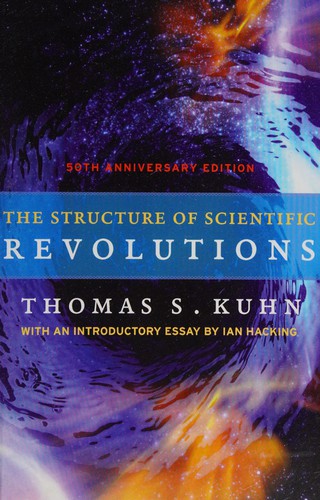
Kuhn’s landmark work, The Structure of Scientific Revolutions, published in 1962, introduced concepts that have since become foundational to philosophy, sociology, and the history of science. Chief among these is the idea of the “paradigm shift” — Kuhn’s term for the revolutionary moment when an established scientific framework collapses and is replaced by an incompatible new one. He argued that science does not simply grow by adding knowledge to knowledge, but proceeds through long periods of “normal science” punctuated by crises and revolutions. The book sold more than a million copies and remains one of the most cited academic works of the twentieth century.
The phrase “paradigm shift” entered everyday language and is now routinely used well beyond the sciences to describe any fundamental change in thinking or approach. Kuhn’s ideas influenced not only philosophy of science but also sociology, cultural studies, and the broader humanities. His work prompted vigorous debate about whether science is truly objective or shaped by social and cultural forces — a debate that continues today.
Kuhn taught at Harvard, the University of California, Berkeley, Princeton University, and the Massachusetts Institute of Technology, where he spent much of his later career. His other major works include The Copernican Revolution (1957) and The Essential Tension (1977). He died on June 17, 1996, in Cambridge, Massachusetts, leaving a legacy that permanently altered the intellectual landscape of the modern university.