M. Scott Peck
M. Scott Peck was an American psychiatrist and bestselling author whose groundbreaking work at the intersection of psychology and spirituality reached tens of millions of readers and fundamentally altered popular understanding of personal growth, love, and moral development. His willingness to take seriously the spiritual dimension of human experience — at a time when mainstream psychiatry often treated it with skepticism — made him one of the most influential and controversial figures in American mental health culture.
Peck was born in New York City in 1936 and grew up in a distinguished family — his father was a judge. He studied at Harvard University and Case Western Reserve University, before completing his medical degree and psychiatric training. He served as a psychiatrist in the U.S. Army, including a posting in Japan, before entering private practice and academic medicine. These diverse experiences — clinical, military, and cross-cultural — gave Peck an unusually broad perspective on human suffering and resilience.
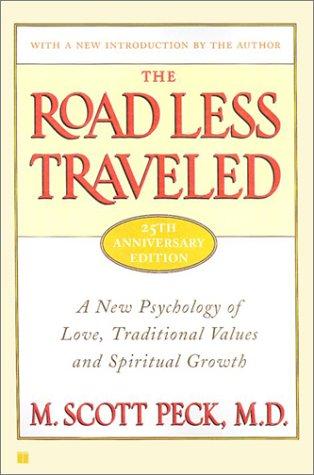
His first and most celebrated book, The Road Less Traveled: A New Psychology of Love, Traditional Values and Spiritual Growth, was published in 1978 and became one of the most extraordinary publishing phenomena of the twentieth century. Opening with the deceptively simple sentence “Life is difficult,” the book went on to argue that genuine psychological and spiritual maturity requires a willingness to confront reality honestly, delay gratification, accept responsibility, and commit to continuous self-examination. It spent an unparalleled 598 weeks on the New York Times bestseller list and has sold over ten million copies.
Peck followed The Road Less Traveled with a prolific writing career that included People of the Lie (1983), a controversial exploration of human evil; The Different Drum (1987), on community building; A World Waiting to Be Born (1993), on civility; and numerous other books. Throughout his work, he maintained the conviction that authentic love is an act of will and discipline rather than a feeling, and that the avoidance of legitimate suffering is the root cause of most mental and spiritual illness.
Peck converted to Christianity in 1980, and his faith increasingly informed his later writing, though he was consistently critical of religious smugness and tribalism. He died in 2005, leaving behind a body of work that continues to challenge and inspire readers seeking to integrate psychological insight with spiritual depth.