
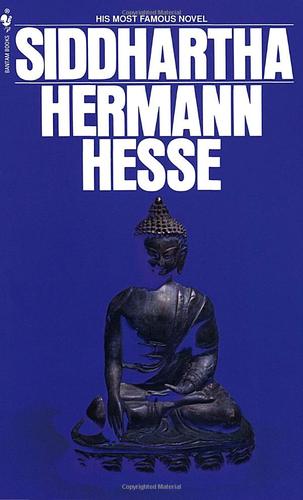
Siddhartha
Bantam Books · 1922 · 152 pages
ISBN: 9780553208849
Review Editor
Eleanor Marsh
Hermann Hesse published Siddhartha in 1922, drawing on years of study of Eastern philosophy and religion, and produced a work that is less novel than prose poem-a philosophical parable written in a style of deliberate simplicity that belies its intellectual seriousness. It was not the novel that won Hesse the Nobel Prize in 1946; that was Steppenwolf and The Glass Bead Game. But it may be the work by which he is most widely read, particularly among readers encountering it in adolescence or early adulthood.
The novel follows Siddhartha-not the historical Buddha but a contemporary of his-through a spiritual quest that leads him through asceticism, sensualism, commerce, and worldly despair before arriving at wisdom through the simplest of vehicles: a river, and an old ferryman named Vasudeva, who teaches by listening rather than speaking.
Hesse’s formal choice-the elevated, somewhat archaic prose, the episodic structure, the deliberately flattened characterization-serves his subject. This is not a realistic novel but a spiritual fable, and its characters are less individuals than stages in a journey. The novel’s central argument, which is less Buddhist than syncretic-that wisdom cannot be transmitted verbally, only lived-is made not through doctrine but through the texture of Siddhartha’s experience.
The novel’s weakness is its thinness as fiction: it lacks the density and surprise of lived life, and its female characters-Kamala the courtesan-exist largely to serve Siddhartha’s journey rather than their own. But as a philosophical journey rendered in beautiful prose, it achieves what it sets out to achieve, and its simplicity is harder to produce than it looks.
Book Details
- Title
- Siddhartha
- Author
- Hermann Hesse
- Genre
- Literary Fiction
- Publisher
- Bantam Books
- Year Published
- 1922
- Pages
- 152
- ISBN
- 9780553208849
- WritersReview Rating
- 4.0 / 5