
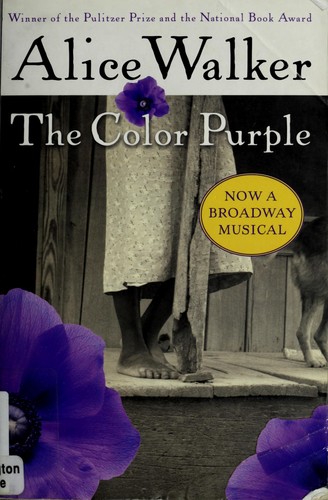
The Color Purple
Mariner Books · 1982 · 292 pages
ISBN: 9780156028356
Review Editor
Eleanor Marsh
Alice Walker’s The Color Purple, published in 1982 and winner of both the Pulitzer Prize and the National Book Award, is told entirely in letters-a formal choice that is also a political choice, since epistolary fiction traditionally grants interiority and agency to voices that narrative prose can render passive. The voice Walker invents for Celie, her narrator-ungrammatical, vernacular, fiercely immediate-is one of the great achievements of American fiction, and the transformation of that voice across the novel’s length is the novel’s central event.
Celie is fourteen when the novel opens, being raped by the man she believes to be her father. Her letters, addressed initially to God and later to her sister Nettie, narrate her life in rural Georgia in the early twentieth century: her forced marriage to Mister, a brutal farmer; her friendship with Shug Avery, Mister’s beloved, who becomes Celie’s own; and the slow, difficult growth toward an identity that belongs to herself rather than to the men who have claimed to own her.
Walker weaves together several stories-Nettie’s parallel letters from Africa, the histories of Harpo and Sofia-but Celie and Shug are the novel’s heart, and their relationship-part romance, part spiritual companionship, part mutual rescue-is rendered with extraordinary tenderness. Walker’s theology, articulated through Shug’s philosophy of a God who is not the old white man’s God, is both radical and moving.
The novel’s weaknesses-Mister’s somewhat schematic conversion, the African subplot’s occasional thinness-do not seriously compromise its achievements. The Color Purple is a landmark of American literature.
Book Details
- Title
- The Color Purple
- Author
- Alice Walker
- Genre
- Literary Fiction
- Publisher
- Mariner Books
- Year Published
- 1982
- Pages
- 292
- ISBN
- 9780156028356
- WritersReview Rating
- 5.0 / 5