Patrick Radden Keefe
Patrick Radden Keefe is the finest long-form journalist and narrative nonfiction writer of his generation, an author whose books and magazine pieces for The New Yorker combine the investigative depth of the best journalism with the novelistic architecture and psychological acuity of literary fiction. Born in 1976 in Boston, Massachusetts, he was educated at Columbia University and then at Cambridge, where he studied as a Gates Scholar, and at Yale Law School. His legal training is visible in the precision and rigor with which he handles complex factual material, and his years as a staff writer at The New Yorker have honed the prose style — elegant, economical, capable of sudden devastating clarity — that distinguishes his books.
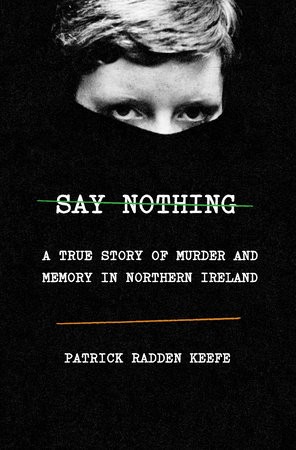
His first major book, Chatter: Dispatches from the Secret World of Global Eavesdropping (2005), drew on his legal expertise to examine signals intelligence and surveillance in the post-September 11 era. His second, The Snakehead: An Epic Tale of the Chinatown Underworld and the American Dream (2009), followed a Chinese immigrant smuggling operation through the American legal system. But it was Say Nothing: A True Story of Murder and Memory in Northern Ireland (2019), reviewed on WritersReview, that established his position as one of the great nonfiction writers working in English. It traces the disappearance and murder of Jean McConville, a mother of ten taken from her home by the IRA in 1972, through the subsequent decades of the Troubles and into the Boston College Belfast Project controversy of the 2010s, weaving together individual stories of violence, grief, and memory into a meditation on how societies reckon with atrocities committed in the name of political causes.
Empire of Pain: The Secret History of the Sackler Dynasty (2021) was his account of the Sackler family, the Purdue Pharma fortune, and the role of the OxyContin epidemic in the opioid crisis — a work of investigative journalism on the grandest scale, tracing three generations of a family dynasty whose philanthropy and whose devastation of American communities were directly linked. It won the National Book Award for Nonfiction in 2023. His subsequent book, Rogues: True Stories of Grifters, Killers, Rebels and Crooks (2022), collected his finest New Yorker pieces and demonstrated the range of his investigative attention.
What makes Keefe extraordinary is his ability to hold enormous complexity — legal, historical, personal, political — in narrative suspension, presenting it not as a collection of facts but as a story with genuine momentum and genuine moral weight. He is not a polemicist, though his books are often profoundly political; he is a storyteller who believes that the full truth of a complicated situation, presented with complete documentary honesty, is more devastating and more illuminating than any argumentative short cut. His ability to make readers care deeply about people and situations they had never considered before, and to leave them both better informed and genuinely unsettled, is the mark of a major literary achievement sustained across a body of work that continues to grow in ambition and importance.