Mary Beard
Mary Beard is the most prominent classicist writing for a general audience in the world today, a scholar whose combination of genuine academic authority, combative intelligence, and gift for communication has made her the public face of classical scholarship in Britain and beyond. Born in 1955 in Much Wenlock, Shropshire, she was educated at Newnham College, Cambridge, where she has spent virtually her entire academic career, becoming a fellow and professor of Classics and one of the most visible academics in the country. She holds the position of Royal Academy of Arts Professor of Ancient Literature and has received an honorary CBE.
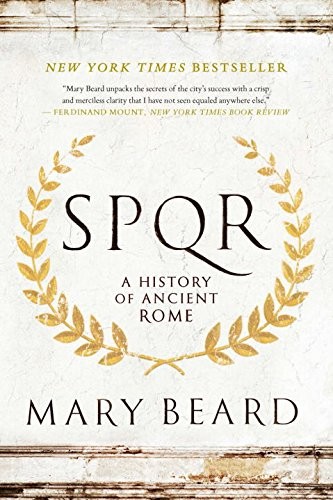
Beard has written important academic works, including The Roman Triumph (2007) and Pompeii: The Life of a Roman Town (2008), the latter of which won the Wolfson History Prize and demonstrated her ability to bring serious archaeological and historical scholarship to a wide general readership without condescension or oversimplification. Her short book SPQR: A History of Ancient Rome (2015) became an international bestseller, presenting a genuinely revisionist account of Roman history that challenged conventional narratives about the rise and fall of Roman power. Her book reviewed on WritersReview represents her characteristic approach: challenging received wisdom about the ancient world and asking what Roman history actually has to teach us about power, democracy, and human nature. Her book Women and Power: A Manifesto (2017) used the history of classical antiquity to examine the deep cultural roots of the silencing of women in public life.
Beard is also a significant public intellectual and cultural commentator who has used social media, television, and journalism to engage in debates about history, culture, and politics with a directness that is unusual for a senior academic. She has been a prominent voice on debates about the classical curriculum, on questions of race and representation in the ancient world (arguing for a more diverse and honest account of Roman Britain, for instance), and on the misogynistic treatment of women who appear publicly in contemporary culture — a subject she experienced firsthand when she was subjected to sustained online abuse after appearing on a television program about immigration. Her willingness to engage with these attacks publicly and without retreat has made her a symbol of intellectual courage for many.
What makes Beard an essential figure in contemporary intellectual life is the combination of genuine classical scholarship — she is a serious academic with a list of publications in refereed journals — and genuine commitment to public engagement. She does not simplify for popular audiences; she invites them into the complexity of the historical questions she finds most compelling. Her television documentaries on Rome, Greece, and the ancient world have brought serious classical scholarship to millions of viewers who would never read an academic monograph. She is one of the most important advocates for the continued relevance of the ancient world to contemporary life, and her books and public interventions together constitute one of the most significant contributions to classical studies of the past three decades.