Candice Millard
Candice Millard is an American narrative historian and former editor at National Geographic magazine whose books have established her as one of the finest practitioners of popular history writing in contemporary American letters. Her gift is for finding true stories of extraordinary physical and moral extremity — stories involving courage, suffering, and death in remote or hostile environments — and rendering them with a novelist’s command of pacing, character, and suspense. She spent years working as a journalist and editor before turning to books, and the skills of magazine writing — the ability to hook a reader in an opening paragraph, to sustain momentum across a long narrative, to make complex historical contexts intelligible without reducing them to simplicity — are fully visible in her work.
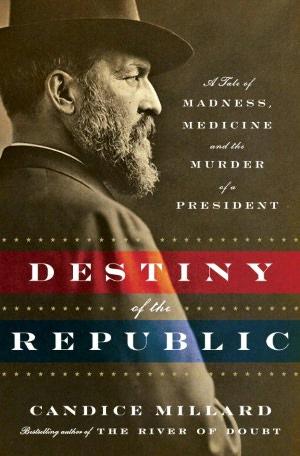
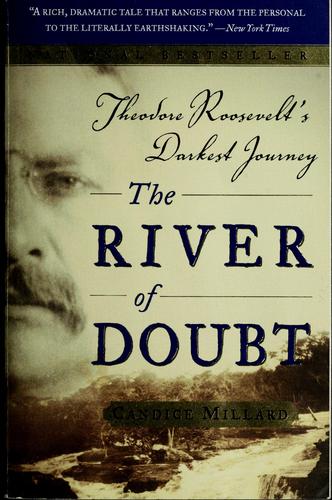
Her first book, The River of Doubt: Theodore Roosevelt’s Darkest Journey (2005), told the story of Roosevelt’s post-presidential expedition down an unmapped Amazon tributary in 1914, an adventure that nearly killed him and left him permanently diminished in health. Her second, Destiny of the Republic: A Tale of Madness, Medicine and the Murder of a President (2011), told the story of the assassination of President James Garfield in 1881 and the subsequent medical malpractice that killed him more surely than his assassin’s bullet had — a narrative that became also an account of the coming revolution in American medicine wrought by Joseph Lister’s discovery of antiseptic surgery. Her book reviewed on WritersReview demonstrates her mastery of the form, bringing the same qualities — meticulous research, narrative drive, and genuine feeling — to a subject that illuminates both a specific historical event and a broader story about human endurance.
Her third book, Hero of the Empire: The Boer War, a Daring Escape, and the Making of Winston Churchill (2016), returned to the story of the young Churchill’s capture and escape during the Boer War, using this pivotal episode to examine the formation of the historical figure who would later lead Britain through its darkest hours. Each of her books follows a similar structure: a dramatic true story of extraordinary events, meticulously reconstructed from primary sources, that becomes in its unfolding also a meditation on questions of character, contingency, and the relationship between individual courage and historical change.
Millard’s prose is transparent and assured, never calling attention to itself but consistently achieving its effects — the escalation of tension, the sudden vividness of a scene, the precision of a characterization — without apparent effort. She has a journalist’s instinct for the telling detail and a historian’s respect for what the documents actually say, and the combination produces books that feel both accurate and alive. She is a writer who reminds readers that history is not the story of abstract forces but of specific human beings making specific choices under conditions of uncertainty and constraint — and that those stories, told honestly, are as compelling as any fiction.