
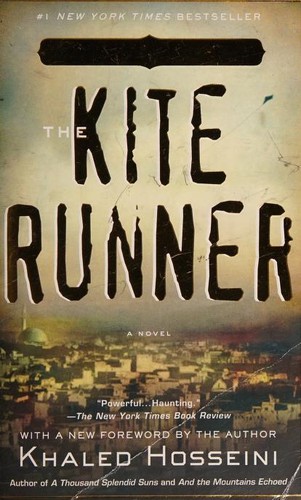
The Kite Runner
Riverhead Books · 2003 · 372 pages
ISBN: 9781594631931
Review Editor
Eleanor Marsh
Khaled Hosseini’s debut novel, published in 2003, became one of the defining literary phenomena of its decade-not because it was formally innovative, which it was not, but because it told a story that millions of readers needed to read and had no other means of accessing: the story of Afghanistan before and after the Soviet invasion, filtered through a relationship of guilt and redemption so primary in its emotional structure that it resonates across any cultural context.
The novel follows Amir, the son of a wealthy Kabul merchant, and Hassan, his Hazara servant boy who is also, though neither knows it for most of the book, his half-brother. A moment of cowardice on Amir’s part-he witnesses Hassan’s rape and does not intervene-becomes the wound around which his life organizes itself. His emigration to America, his marriage, his career as a writer in San Francisco, all occur in the shadow of that failure. When he returns to Taliban-controlled Afghanistan to rescue Hassan’s son, the novel’s moral architecture reaches its conclusion.
Hosseini writes in a traditional narrative mode-linear, clearly organized, emotionally direct-and the emotional directness is the novel’s strength and its occasional weakness. Some of the guilt-and-redemption machinery is somewhat schematic; the parallels between Amir and Hassan’s story are occasionally too neat. But the historical specificity of the novel-its rendering of Kabul across multiple political eras, its portrait of the Afghan diaspora in America-gives it a documentary weight that transcends the personal narrative.
As a window into a world most Western readers knew nothing about, The Kite Runner performed an act of literary citizenship that its formal qualities alone do not fully explain.
Book Details
- Title
- The Kite Runner
- Author
- Khaled Hosseini
- Genre
- Literary Fiction
- Publisher
- Riverhead Books
- Year Published
- 2003
- Pages
- 372
- ISBN
- 9781594631931
- WritersReview Rating
- 5.0 / 5