A.M. Strickland
A.M. Strickland is an American author of young adult and adult fantasy fiction whose work blends mythology, dark fantasy, and LGBTQ+ themes. Their debut novel, Shadow Run (co-authored with Michael Miller, 2017), established them as a voice in YA science fiction, but it is their subsequent solo work that has developed their most distinctive voice. They live in the Pacific Northwest and draw on a wide range of mythological traditions in their world-building.
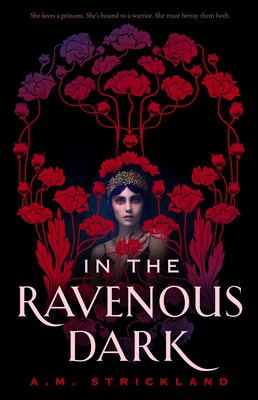
In the Ravenous Dark (2021), available on WritersReview, is a standalone young adult fantasy novel set in a world loosely inspired by ancient Greek and Near Eastern mythology, in which the dead are kept from haunting the living by blood mages known as Reapers. The protagonist, Rovan, is a young woman who unwillingly becomes a Reaper and must navigate the treacherous politics of an empire in which blood magic is both essential and strictly controlled. The novel weaves together themes of bodily autonomy, forced servitude, queer identity, and political resistance in a narrative that is both entertaining as a fantasy adventure and genuinely engaged with the real experiences it allegorises. Its world-building is vivid and its characters are drawn with warmth and specificity.
Strickland’s work is notable for its centering of LGBTQ+ characters and relationships, not as a political statement but as a natural feature of the worlds they build — worlds in which the range of human love and identity is simply part of the landscape, as it is in life. Their fiction is written primarily for young adult readers but has the thematic complexity and emotional depth to engage adults equally. The dark fantasy mode they work in — morally ambiguous magic systems, oppressive political structures, characters who must negotiate between survival and integrity — allows for the exploration of difficult themes within the safety of the fantastical frame.
They continue to be an active presence in the YA fantasy community and represent a generation of authors for whom diversity in genre fiction is not an agenda but a given — a starting assumption from which interesting stories can then be built. Their work demonstrates that fantasy rooted in the full range of human experience, rather than in a narrow conception of its audience, produces richer and more resonant fiction for everyone.