
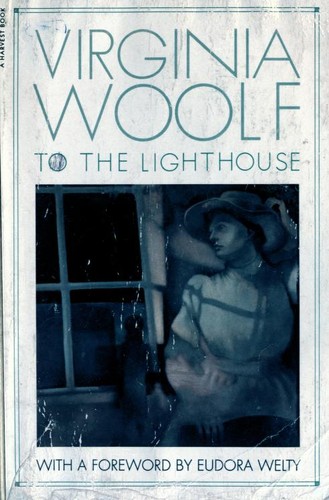
To the Lighthouse
Harvest Books · 1927 · 209 pages
ISBN: 9780156907392
Review Editor
Eleanor Marsh
Published in 1927, To the Lighthouse is Virginia Woolf’s most formally audacious novel and arguably her most personal. The book is organized around a single postponed journey-the Ramsay family’s plan to visit the lighthouse on the Isle of Skye-and uses that deferrment to excavate the nature of time, loss, and the impossibility of perfect understanding between persons.
The novel’s structure is triptych: the long opening section “The Window,” spanning a single afternoon and evening before the First World War; the brief, elegiac “Time Passes,” in which the war intervenes and Mrs. Ramsay dies in parentheses; and the final section “The Lighthouse,” set a decade later when surviving members of the family return. This architecture mimics the rhythm of grief: the first part dense with ordinary life, the second brutally compressive of catastrophe, the third an attempt at continuation in the knowledge of what has been lost.
Woolf’s prose in this novel achieves something almost impossible: it renders the phenomenology of consciousness-the wayward drift of attention, the sudden intensity of a sensory impression, the social calculus of every exchange-with such fidelity that reading it feels less like following a story than inhabiting a way of being in the world. The famous stream-of-consciousness technique is deployed here not as experiment but as the only truthful way to tell this particular story.
Mrs. Ramsay, half portrait of Woolf’s own mother, is one of the immortal characters of English fiction: socially accommodating, privately fierce, dispensing vitality to those around her at some invisible cost to herself. Lily Briscoe, the artist struggling with her painting across the novel’s entire span, completes what Mrs. Ramsay begins-and in the novel’s final sentence, achieves a resolution that is simultaneously personal and aesthetic and, for the reader, deeply moving.
Book Details
- Title
- To the Lighthouse
- Author
- Virginia Woolf
- Genre
- Literary Fiction
- Publisher
- Harvest Books
- Year Published
- 1927
- Pages
- 209
- ISBN
- 9780156907392
- WritersReview Rating
- 5.0 / 5