
Summary
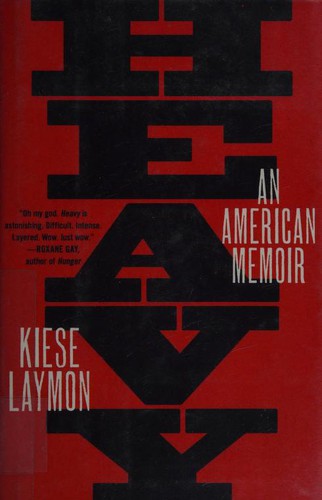
Kiese Laymon addresses Heavy to his mother. It is the most radical formal choice in the book, and there are many radical formal choices: the memoir is structured as a direct address, “you” throughout, a letter to the woman who shaped him and harmed him and who he loves with a complexity that the book spends 241 pages trying to understand. The result is one of the most intimate and uncomfortable memoirs published in recent years, a book that makes you feel like you are reading someone’s private reckoning, which is exactly what it is.
The book traces Laymon’s life from childhood in Mississippi through his adult years as a writer and professor, with particular attention to his relationship with food, his body, his mother’s body, and the broader weight of being a Black man in America. “Weight” is the book’s governing metaphor and its literal subject: Laymon describes years of extreme weight fluctuation, of eating as self-punishment and comfort and escape, of exercise as another form of punishment, and of his mother’s own complex relationship with her body and his.
This is a book about love that has cost too much. About the ways that trauma moves through families across generations. About what it means to be a Black body in a country that has decided what that body is worth before it is born. And about the possibility, not certain but not foreclosed, of something like repair.
Character Arcs and Development
The young Kiese of the book’s early sections is a child trying to survive a mother who loves him fiercely and punishes him fiercely and cannot always distinguish between the two. The adolescent Kiese is discovering that his body has meaning beyond his own experience of it: that it will be read by police, by school administrators, by the entire apparatus of a society that has decided what Black male bodies signify. The adult Kiese is a writer trying to understand all of this, and the memoir is the document of that attempt.
Laymon’s mother, Carol, is one of the most fully realized figures in recent memoir. She is not rendered as a villain, though she does things that a child should not have to survive. She is rendered as a person whose own trauma has not been examined, who loves her son with everything she has, and who does not have enough. Her presence in the book is constant even in her absence from specific scenes, and the book’s final sections, in which she and Laymon begin a different kind of conversation, are among the most quietly hopeful pages he has written.
Pacing
Heavy is not a book that moves in a straight line. It circles its subjects the way Laymon circles food: approaching, retreating, approaching again. The temporal structure is deliberately non-linear, moving between different periods of Laymon’s life without the chronological tidiness that memoir often imposes on experience. This creates the effect of memory, which is also non-linear, which also circles and returns.
The book is short by the standards of ambitious memoir, but it does not feel small. Laymon writes with such density that individual sentences require rereading, and passages that seem complete reveal new dimensions on return. The 241 pages contain more than twice their number in most memoirs.
Deeper Thematic Exploration
The book’s central argument is that weight, both literal and metaphorical, is not personal. It is passed down. Laymon traces the weight he carries to his grandmother, to his mother, to a Mississippi that has never adequately reckoned with what it did to its Black residents. The obesity, the eating disorders, the punishment of his body: none of these are choices made in isolation. They are the accumulated responses of a person to the accumulated weight of a history.
Laymon is also writing about excellence as a form of survival. He became an excellent student, an excellent writer, because excellence was the only bargaining chip available, the only thing that might purchase some protection from what awaited Black boys who failed to perform. The performance cost him enormously, and the book is in part a reckoning with that cost.
The book’s treatment of the mother-son relationship is the most nuanced in recent memoir, precisely because Laymon refuses to assign blame in the ways the genre often demands. He holds his love and his hurt simultaneously, and the refusal to resolve them into one is the book’s most honest move.
Style and Voice
Laymon’s prose is unlike anything else in contemporary memoir. It is dense, urgent, and rhythmically complex, moving between long accumulating sentences and very short declarative ones with the effect of breath: held, then released. The decision to address the book to his mother gives every sentence a dual audience: the mother who is being addressed and the reader who is overhearing, and this creates an intimacy that is both uncomfortable and necessary.
He writes in the vernacular of Mississippi Black English without apology, and this is a formal argument as well as a stylistic choice: the language of his home is the language of his body and his trauma, and to write in any other register would be a kind of self-betrayal. The result is prose that feels spoken as much as written, that carries the rhythms of speech into the territory of literature.
Verdict
Heavy is one of the most important memoirs published in the twenty-first century. It does not provide the comforts that memoir often provides: the clean arc of healing, the transformation that makes the suffering retrospectively meaningful, the resolution that lets the reader breathe. It provides something harder and more valuable: honest witness to a life, and to the forces that shaped it, without the softening that honesty usually requires.
It is not an easy book. It is also not a book that can be put down easily, which is both a testament to Laymon’s craft and a sign of how much the book demands from its readers. It demands that they stay in discomfort, which is what the people it describes have had to do all their lives.
Five stars: a necessary and enduring work of American memoir.
What is Heavy about?
Heavy is a memoir by Kiese Laymon addressed to his mother. It covers his childhood and adult life in Mississippi and beyond, with particular attention to his relationship with food, his body, race, family trauma, and love. It uses weight, both literal and metaphorical, as its organizing principle: the weight of Laymon’s body, his mother’s body, and the accumulated weight of racial violence and generational trauma.
Why is the book addressed to Laymon’s mother?
The direct address is a formal choice that shapes every sentence in the book. Writing to his mother allows Laymon to maintain the specific intimacy of a private conversation while making it public, to hold his mother accountable while refusing to position himself outside the relationship, and to explore a dynamic too complex for the third-person distance of conventional memoir. It is a radical and successful formal gamble.
Is this book appropriate for readers who have experienced trauma?
The book deals directly with childhood abuse, eating disorders, racial violence, and intergenerational trauma. Readers with personal experience of these topics may find it deeply resonant or may find it activating, depending on where they are in their own processing. It is not a book that treats difficult material lightly, but it is also not a book that exploits difficulty for effect. The tone is honest rather than sensational.
What awards did Heavy win?
Heavy won the Andrew Carnegie Medal for Excellence in Nonfiction in 2019 and was a finalist for multiple other awards. It also appeared on numerous best-of lists for 2018 and has become a significant text in discussions of contemporary American memoir, Black literature, and writing about the body.
How long is Heavy and how does it read?
At 241 pages it is relatively short for ambitious memoir, but it reads slowly because of the density of its prose and the weight of its subject matter. Most readers report taking longer to finish it than the page count would suggest, and finding it difficult to read in long stretches. This is not a criticism; it is a description of the book’s effect.
Is this a book about weight loss?
No, though weight is central to it. The book is not a before-and-after narrative or a diet memoir. It uses weight and the body as a way to examine much larger questions about race, family, survival, and love. Readers who come looking for a weight loss journey will find something considerably more complex and more interesting.
How does Heavy compare to other memoirs about race and family?
Heavy occupies a distinctive position in contemporary memoir because of its formal choices, particularly the direct address, its prose style, and its refusal to provide the conventional satisfactions of the memoir arc. It invites comparison with Jesmyn Ward’s Men We Reaped in its treatment of Black life in Mississippi, and with Carmen Maria Machado’s In the Dream House in its formal experimentation, but it is ultimately its own thing.
Does the book have a hopeful ending?
The ending is complex. There is movement toward repair between Laymon and his mother, and a sense of something beginning that might become healing. But Laymon is too honest a writer to pretend that the damage has been undone or that the structural forces that caused it have changed. The hope at the end of the book is modest and hard-won, which is the only kind that feels earned.
Book Details
- Title
- Heavy
- Author
- Kiese Laymon
- Genre
- Biography
- Publisher
- Scribner
- Year Published
- 2018
- Pages
- 241
- ISBN
- 9781501125652
- WritersReview Rating
- 5.0 / 5