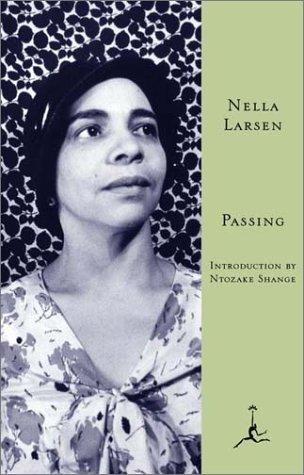
Nella Larsen
Nella Larsen was born on April 13, 1891, in Chicago, Illinois, to a Danish mother and a father from the Danish West Indies (now the U.S. Virgin Islands) who died or disappeared when she was young. Her mother subsequently married a Danish man, and Nella grew up as the racially mixed child in an otherwise white Danish family — an experience of racial ambiguity and social precariousness that lies at the heart of her fiction. She was educated at a normal school in Chicago and the University of Copenhagen, trained as a nurse at Lincoln Hospital in New York, and worked as a nurse and librarian before publishing the two novels on which her reputation rests. She was a key figure in the Harlem Renaissance, moving in the circle of Langston Hughes, W. E. B. Du Bois, and Walter White, and her novels appeared at the movement’s height.
Larsen published two novellas in rapid succession: Quicksand (1928) and Passing (1929). Both were received as important works of the Harlem Renaissance and earned Larsen the Harmon Foundation Award and a Guggenheim Fellowship — making her the first Black woman to receive the latter. After a plagiarism controversy over a short story in 1930, and the dissolution of her marriage to a physicist who had a public affair, Larsen largely withdrew from literary life and returned to nursing, working as a nurse in New York until her death in 1964. She published nothing further, and her work faded from view for decades before being rediscovered by feminist and Black literary scholars in the 1970s.
Passing is the shorter and more formally concentrated of her two novellas, and the work for which she is now primarily celebrated. It follows Irene Redfield, a light-skinned Black woman who lives openly as Black in Harlem, and her chance reencounter with Clare Kendry, a childhood friend who is passing as white and married to a virulent racist. The relationship between the two women — its desire, its jealousy, its danger — unfolds with a psychological intensity and formal compression that earns comparison with the great European short novels. The novella interrogates racial identity as performance, explores the psychic costs of passing, and probes a female desire that cannot quite speak its name. Its ending is deliberately ambiguous: did Clare fall, jump, or was she pushed?
Larsen’s prose style is cool, precise, and acutely attentive to surfaces — to clothes, rooms, faces, and the social codes inscribed in physical appearances. She writes about the experience of being mixed-race in early twentieth-century America with an insider’s intimacy and an observer’s distance, and her fiction anticipates later theoretical discussions of race as social construction and performance. The influence of Henry James — whom she admired — is visible in her restricted point of view and her method of rendering character through behavior and implication rather than explicit statement.
The rediscovery of Nella Larsen’s work has been one of the major achievements of feminist and African American literary scholarship. Passing and Quicksand are now recognized as classics of both the Harlem Renaissance and American modernism, and Passing was adapted into a critically acclaimed film directed by Rebecca Hall in 2021, introducing Larsen’s work to a large new audience. She is now understood as one of the essential voices of early-twentieth-century American literature, and her brief, brilliant novellas are likely to endure as long as questions of racial identity and social performance remain central to American life.