Ray Bradbury
Ray Bradbury was born on August 22, 1920, in Waukegan, Illinois, and grew up during the Depression-era Midwest in a household where books, carnival magic, and radio serials fed an imagination of extraordinary intensity. He moved with his family to Los Angeles in 1934 and never earned a college degree, educating himself instead at the Los Angeles Public Library, where he spent years reading voraciously across science, history, mythology, and literature. He sold newspapers on street corners to support himself while writing, and published his first professional story at the age of twenty-two. This self-made, library-forged education gave his work a particular quality: the wonder of a mind that came to knowledge without institutional gatekeeping.
Bradbury published his first major collection, Dark Carnival, in 1947, drawing on the Gothic and grotesque traditions of horror fiction. But it was The Martian Chronicles (1950) and The Illustrated Man (1951) that established his signature mode: science fiction and fantasy as moral fable, speculative premises used not to predict the future but to examine the present — its conformities, its fears, its capacity for both beauty and destruction. His Mars was never a real planet; it was a mirror held up to mid-century America.
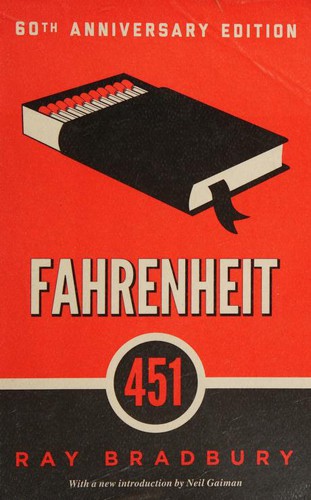
Fahrenheit 451 (1953), available on WritersReview, is one of the most enduring and widely read dystopian novels in the English language. In a future America where books are banned and firemen burn rather than extinguish, Guy Montag begins to question the society he enforces. The novel is a passionate defense of reading, imagination, and the individual mind’s resistance to mass culture and state censorship. Bradbury wrote it partly on a typewriter in the UCLA library basement, paying ten cents per half-hour — a fact he loved to cite as evidence that libraries could save civilization. Fahrenheit 451 has never gone out of print, has sold tens of millions of copies, and remains one of the most assigned texts in American high schools.
Bradbury’s other major works include Something Wicked This Way Comes (1962), a dark fantasy about a boy’s confrontation with a sinister carnival, and Dandelion Wine (1957), a lyrical, semi-autobiographical novel set in a fictionalized version of his Waukegan childhood. He was a prolific writer of short stories — collections including The Golden Apples of the Sun, A Medicine for Melancholy, and I Sing the Body Electric! demonstrate a range extending from science fiction to horror to domestic realism — and also wrote screenplays, including the adaptation of Moby Dick for John Huston.
Bradbury received the National Medal of Arts in 2004, a Pulitzer Prize Special Citation in 2007, and was a Grand Master of Science Fiction. He died in Los Angeles on June 5, 2012, at the age of ninety-one. His legacy is enormous: he made science fiction literary, he made wonder politically serious, and he argued with lifelong consistency that the love of books and the freedom to read them are not luxuries but necessities. Fahrenheit 451 grows more urgently relevant with each passing decade.