
Summary
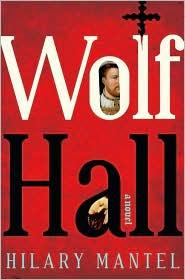
Hilary Mantel published Wolf Hall in 2009, and it won the Man Booker Prize, and it upended what literary historical fiction could do. The novel covers the years 1500 to 1535 in Tudor England, from Thomas Cromwell’s early adulthood through his ascent to become Henry VIII’s chief minister following the fall of Cardinal Wolsey. Mantel does something formally audacious: she tells the story in the present tense, through a close third person that cleaves so tightly to Cromwell’s consciousness that it functions as first person, and she refers to her protagonist as “he” throughout, which forces the reader to orient every scene around Cromwell’s perspective.
The effect is not modernist difficulty but something more like inhabitation. Reading Wolf Hall is less like reading about Cromwell than like being him, which means experiencing the Tudor court from the inside of its most capable, most watchful intelligence. Cromwell is a blacksmith’s son who became a merchant, a soldier, a lawyer, and eventually the most powerful man in England after the king.
The novel’s central drama involves the king’s desire to dissolve his marriage to Catherine of Aragon and marry Anne Boleyn. Cromwell engineers this through legal and political means that required dismantling the English church’s relationship with Rome, an achievement shown proceeding through conversations in cramped rooms rather than grand speeches, through favors traded and information withheld.
Character Arcs and Development
Thomas Cromwell emerges from Wolf Hall as one of the most fully realized characters in English fiction. Mantel renders him as someone who is simultaneously ruthless and tender, politically calculating and personally loyal, capable of great cruelty and genuine kindness. He is a pragmatist rather than an ideologue, and Mantel shows how that quality is actually a sophisticated form of intelligence about how power works.
His household, large and chaotic and full of young men he has taken in from various circumstances, is one of the novel’s richest textures. Cromwell feeds people, literally and figuratively. He remembers names. He finds employment for people who have no one else to ask. This humanity coexists with his political ruthlessness in ways the novel refuses to explain away.
Anne Boleyn is rendered through Cromwell’s skeptical eye: her charm and intelligence are real, not mere reputation, but we see her limitations clearly. Cardinal Wolsey is present mainly in retrospect, but his shadow falls over the entire novel. Thomas More is depicted with cold precision as a man whose principled certainty makes him intolerable to live with and finally dangerous to oppose.
Themes and Symbolism
Wolf Hall is, at its deepest level, a novel about power: who holds it, how it is exercised, and what it costs the people who understand it well enough to use it. Cromwell is a specialist in the spaces between explicit rules and the actual mechanisms of authority. The novel refuses the romantic notion that power corrupts purely, that the smart and feeling person is somehow separate from the machinery of politics.
The reformation of the English church is treated as a political event as much as a religious one. Cromwell uses religious reform as a tool; he is a pragmatist in theology as in everything else. Mantel does not diminish the genuine spiritual stakes for other characters while showing that, for the most powerful figures, doctrine is a battleground for other interests.
Writing Style and Craft
Mantel’s prose is dense and extraordinarily well-controlled. The present tense gives even quiet scenes urgency; the close third person makes every observation feel charged with Cromwell’s particular intelligence. The dialogue is superb: Tudor speech rendered in modern English without archaic stiffness or contemporary anachronism. Some passages, particularly the scenes of Wolsey’s decline, achieve a density and power that is rare in any fiction.
Historical and Cultural Context
The Henrician Reformation – the break with Rome, the dissolution of the monasteries, the establishment of royal supremacy over the church – is one of the most consequential events in English history. Mantel treats it not as a providential triumph or a catastrophe, but as a political process driven by specific human interests and managed by a specific human intelligence. This is historically sophisticated and novelistically daring.
Final Assessment
Wolf Hall is one of the finest historical novels written in English. It demands patience with the pronoun choices, engagement with historical detail, and willingness to inhabit a mind that does not always explain itself. The demands are repaid with interest. Mantel has written a novel that makes the past feel as immediate and as morally complex as the present, which is what the best historical fiction has always done and almost none achieves. Essential reading.
FAQ
- What is Wolf Hall by Hilary Mantel about?
- A historical novel set in Tudor England during the 1520s and 1530s, following Thomas Cromwell as he engineers Henry VIII’s break with the Catholic Church and his marriage to Anne Boleyn. The novel shows history as a matter of intelligence, patience, and the management of human weakness rather than grand gestures.
- Why does Wolf Hall refer to its main character as “he”?
- Mantel’s choice to use “he” rather than “Cromwell” throughout is a deliberate technique to keep the reader oriented within Cromwell’s perspective. When “he” does something, it is always Cromwell doing it, because the narration cleaves so closely to his consciousness. The technique forces the reader to inhabit Cromwell’s point of view rather than observe him from outside.
- Is Wolf Hall historically accurate?
- Mantel conducted extensive historical research and the broad outlines of events are historically grounded. She departs from the conventional image of Cromwell as a villain based on her reading of the historical evidence. Historians have praised her research while acknowledging this is imaginative reconstruction rather than biography.
- Do I need to know Tudor history to enjoy Wolf Hall?
- Basic knowledge helps but is not required. A familiarity with Henry VIII, Catherine of Aragon, Anne Boleyn, and Thomas More will smooth entry into the novel. Mantel provides enough context within the narrative to orient careful readers.
- Is Wolf Hall part of a series?
- Yes. It is the first volume of Hilary Mantel’s Thomas Cromwell trilogy. Bring Up the Bodies covers the fall of Anne Boleyn and won Mantel her second Booker Prize in 2012. The Mirror and the Light (2020) follows Cromwell to his execution. Mantel died in 2022.
- Is there a TV adaptation of Wolf Hall?
- Yes. The BBC produced a six-part adaptation in 2015 starring Mark Rylance as Cromwell, Damian Lewis as Henry VIII, and Claire Foy as Anne Boleyn. Rylance’s performance is particularly celebrated. It is available on streaming platforms.
- What age group is Wolf Hall for?
- Written for adult readers. Its historical and political complexity, demanding prose style, and subject matter all place it firmly in adult literary fiction. Older high school students with strong interest in history may engage with it, but it rewards a reader with some life experience.
- Should I read Wolf Hall?
- If you have any interest in historical fiction, Tudor England, the novel of political intelligence, or literary prose at the highest level of craft, yes. Start with Wolf Hall and, if captivated, commit to all three volumes.
Book Details
- Title
- Wolf Hall
- Author
- Hilary Mantel
- Genre
- Literary Fiction
- Publisher
- Picador
- Year Published
- 2009
- Pages
- 650
- ISBN
- 9780312429980
- WritersReview Rating
- 5.0 / 5