
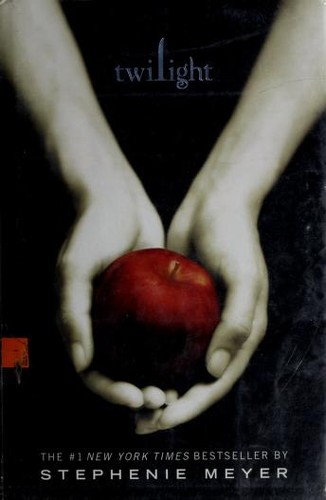
Twilight
Little, Brown and Company · 2005 · 498 pages
ISBN: 9780316160179
Review Editor
Zoe Adler
The Phenomenon and the Book
Twilight is one of the best-selling novels of the twenty-first century, a cultural phenomenon that arrived in 2005 and spent years reshaping the YA publishing landscape. It is also a novel that has attracted enormous critical disdain – for its prose, its gender politics, its conception of romantic love. Both the reverence and the contempt tend to obscure what the book actually is and what it actually does. Twilight, whatever its limitations, works. It does the one thing a genre novel must do: it creates an experience, in this case the experience of first love as a kind of overwhelming, identity-altering force, with such intensity that readers do not merely follow it but feel it. Understanding how Stephenie Meyer accomplishes this is more interesting than dismissing her for accomplishing it.
Bella Swan: The Blank Page and the Problem
Bella Swan is, by design, a character with few distinguishing features: she is clumsy, bookish, self-deprecating, and remarkable primarily to others rather than to herself. This has been criticized as evidence of lazy characterization, and the criticism has merit – Bella is not a fully realized character in the way that Katniss Everdeen or Hazel Lancaster are. But Meyer’s intentions are more complex than they appear. Bella’s blankness is partly a reader-identification strategy: she is designed to be occupied rather than observed, to be the empty vessel through which readers can experience the fantasy of being loved by Edward Cullen. Whether this is a defensible literary choice depends on what you think fiction is for.
Edward Cullen: The Fantasy Examined
Edward is where Meyer’s imagination operates at full power. He is beautiful, dangerous, old, controlled, obsessively devoted, and perpetually on the edge of losing control around Bella. He is, explicitly, a predator who has chosen not to prey on humans, and his love for Bella is described as the most difficult exercise of his century-long self-discipline. This dynamic has been analyzed extensively and often critically as modeling unhealthy relationship patterns – Edward’s controlling behavior, his surveillance of Bella, his sense that he knows better than she does what is good for her. These critiques are legitimate. They are also missing something about how fantasy operates: Edward represents not a model for real relationships but an exaggeration of the experience of being desired so completely that it feels overwhelming and dangerous. This is a real emotional experience, particularly for adolescent readers, and Meyer renders it powerfully.
The Setting: Forks as Atmosphere
Forks, Washington – rainy, gray, perpetually overcast, small enough that everyone knows everyone’s business – is an excellent choice of setting. Meyer uses it to establish both the mood of the novel (brooding, interior, slow-building) and the logic of the Cullen family’s presence: they can live in Forks without sunlight exposure, maintaining their vegetarian vampire lifestyle. The school scenes have a particular quality of accuracy – the awkwardness of being new, the social dynamics of a small high school, the specific way attention feels both wanted and unwanted. Meyer is a sharp observer of adolescent social anxiety.
The Romance as Engine
The novel’s primary achievement is the construction of romantic tension. Meyer understands that desire is most intense when it is deferred, and she defers the resolution of Bella and Edward’s relationship for nearly the entire novel. The scenes where they are in proximity but cannot act on their attraction – the biology class where Edward cannot bear Bella’s scent, the car ride after the near-accident, the meadow conversation – are constructed with a precision that explains the book’s grip on its readers regardless of what one thinks about the prose or the characterization. The tension is the novel. When it finally releases in the declaration scene, it provides the emotional payoff of a mechanism built over three hundred pages.
The Writing and Its Critics
The prose is functional rather than literary, and critics are right that it occasionally tips into awkwardness. Meyer overuses certain adjectives (there is a great deal of “perfect” and “beautiful”) and the exposition sometimes stalls the momentum. These are real weaknesses. What critics less often acknowledge is that the prose’s directness and accessibility is part of why the novel works so efficiently for its target audience: the emotional content is never obscured by stylistic difficulty. Meyer writes exactly at the level of clarity that her story requires, and for many readers that is more than sufficient.
Verdict
Twilight is not a well-crafted novel by the standards of literary fiction, but it is an extraordinarily effective one by the standards of popular romance. Understanding why it works – the precise construction of deferred desire, the intensity of being the object of consuming attention – is more instructive about the mechanics of genre fiction than dismissing it. It has real flaws and real power, and both deserve honest acknowledgment.
What is Twilight about?
Bella Swan moves from Phoenix to the small, rainy town of Forks, Washington to live with her father and immediately becomes fascinated by the beautiful and mysterious Edward Cullen, who seems to despise her on sight. She eventually discovers he is a vampire, and he discovers that her blood is more compelling to him than anyone else’s. Despite – or because of – this danger, they fall in love, and their relationship is tested when a group of dangerous vampires arrives in Forks and becomes interested in Bella.
Is Twilight appropriate for young teenagers?
The novel is appropriate for readers thirteen and up. It contains no explicit sexual content (Meyer’s personal values as a Latter-day Saint are reflected in how the romance is handled) and the violence, while present, is not graphic. The relationship dynamics between Bella and Edward have been the subject of critical discussion regarding unhealthy relationship modeling, and parents of younger or more impressionable readers may want to discuss these dynamics. The novel itself is considerably tamer in content than its reputation suggests.
Why is Twilight so controversial among critics?
Criticism of Twilight focuses primarily on three areas: the prose quality, which many literary critics find weak; the characterization of Bella, who is seen as passive and defined primarily by her love interest; and the relationship dynamics between Bella and Edward, which some critics argue model controlling or possessive behavior as romantic. These are legitimate criticisms, and Meyer herself has acknowledged evolving views on some of them. Defenders argue that the novel operates as fantasy rather than a relationship guide, and that the intensity of its romantic appeal deserves analysis rather than dismissal.
How did Twilight change YA publishing?
The series demonstrated that there was an enormous and underserved market for YA romantic fiction with supernatural elements, launching a wave of paranormal romance titles throughout the late 2000s. It also contributed to the broader recognition that YA fiction had a massive adult readership – many Twilight fans were adults reading alongside their teenage daughters. The series’ commercial success helped establish YA as a publishing priority rather than a secondary market, with lasting effects on how publishers approach the category.
How do the Cullens’ vampire rules work?
Meyer’s vampires differ from the traditional conception in several ways: they are not killed by sunlight but sparkle in it, making daylight a social inconvenience rather than a mortal threat; they have no need for sleep or breath; they have physical gifts that vary by individual (Edward reads minds, Alice sees the future). The Cullen family are “vegetarians” who feed only on animal blood, which requires constant self-discipline. Meyer’s vampire mythology is internally consistent and imaginatively detailed, and it is one of the novel’s genuine creative achievements.
Is Edward Cullen’s behavior actually controlling?
Some of Edward’s behavior – watching Bella sleep without her knowledge, making decisions on her behalf, expressing that he can’t be around her while also refusing to leave her – does resemble controlling relationship dynamics. Meyer frames these behaviors as evidence of love and concern rather than control, and within the fantasy context they are experienced as such by Bella and many readers. Whether readers should analyze these dynamics critically or simply experience the fantasy as designed is a genuine question about what fiction is for, and one the novel continues to generate discussion about in classrooms and online.
How does Twilight compare to Anne Rice’s vampire fiction?
Rice’s Interview with the Vampire is a more literarily sophisticated work, interested in existential crisis, guilt, and the horror of immortality. Meyer’s vampires are more romantic – they retain human concerns and desires, their immortality is presented as beautiful rather than monstrous. The two series occupy different ends of the vampire fiction spectrum: Rice’s is gothic horror with literary ambitions, Meyer’s is romance fantasy with supernatural elements. Both are successful at what they attempt; they are simply attempting different things.
Should the sequels be read?
The Twilight Saga continues with New Moon, Eclipse, and Breaking Dawn. The later novels become more operatic in scale and more explicitly concerned with the question of Bella’s humanity versus her desire for vampire immortality. New Moon, which separates Bella and Edward for most of the novel, is generally considered the weakest; Eclipse and Breaking Dawn are the most consequential for the overall arc. Readers invested in the relationship will find the sequels satisfying; the series must be read as a complete unit to see where Meyer was ultimately headed with her mythology.
Book Details
- Title
- Twilight
- Author
- Stephenie Meyer
- Genre
- Young Adult
- Publisher
- Little, Brown and Company
- Year Published
- 2005
- Pages
- 498
- ISBN
- 9780316160179
- WritersReview Rating
- 4.0 / 5