
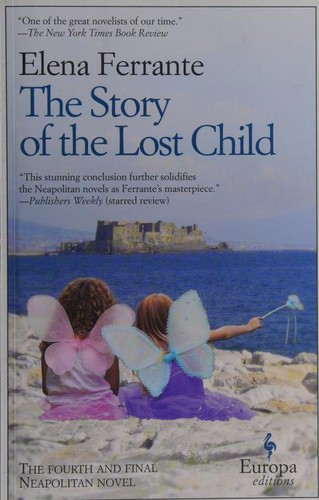
Elena Ferrante’s The Story of the Lost Child brings the Neapolitan Novels to a close with the same unrelenting honesty that made the series one of the defining literary events of the decade. This fourth and final volume follows Elena (Lenù) and Lila across middle age and into old age, their friendship as knotted and electric as ever, their fates still braided together even as their lives diverge in ways neither could have imagined.
The novel opens in the aftermath of Book Three’s upheavals: Lenù has returned to Naples with her daughters, reconstituting a life in the neighborhood she once fled. Ferrante is unsparing about what this return costs — the slow erosion of professional ambition, the daily abrasions of domestic life, the particular loneliness of a woman who has seen more of the world than those around her and still cannot leave it behind. Meanwhile Lila, brilliant and ferocious, builds a software business in the 1980s tech boom while the Camorra’s grip on the neighborhood tightens.
At the center of both women’s lives is the child of the title: Tina, Lila’s beloved daughter, who disappears in a way that scars the novel and Lila permanently. Ferrante handles this disappearance with extraordinary restraint. We never learn exactly what happened. The not-knowing is the point — grief that cannot be resolved into story, trauma that simply becomes part of the texture of a life. Lila’s response, a gradual dissolution of self she calls smarginatura, is one of the most psychologically precise portraits of breakdown in contemporary fiction.
Lenù’s narration, written from the vantage of old age, carries the weight of retrospect with quiet complexity. She is an unreliable narrator not through deception but through the ordinary limits of self-knowledge. Her ambivalence toward Lila — love, envy, dependency, irritation — has never felt more honest. The final pages, in which Lila vanishes and Lenù discovers what she has left behind, are among the most resonant conclusions in recent literary memory.
Ann Goldstein’s translation continues to deserve its own standing ovation. She has carried four novels’ worth of Naples across the language barrier without losing a drop of its heat.
The Story of the Lost Child is not the easiest of the four books — it is the most diffuse, the most willing to let time pass without drama — but it is perhaps the most profound. Ferrante earns her ending. What began as a story of two girls in a poor Neapolitan neighborhood becomes, in its final pages, a meditation on what women owe each other, what they take, and what can never be recovered once it is gone.
A landmark achievement. Essential reading.
Book Details
- Title
- The Story of the Lost Child
- Genre
- Literary Fiction
- WritersReview Rating
- 5.0 / 5