
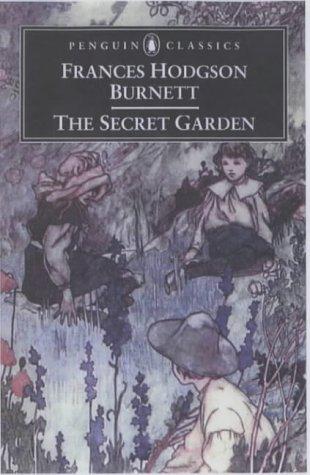
The Secret Garden
Penguin Classics · 1911 · 288 pages
ISBN: 9780142437056
Review Editor
Hannah Bright
The Secret Garden is a 1911 children’s novel by Frances Hodgson Burnett, the English-American writer best known for A Little Princess and Little Lord Fauntleroy. It was first serialized in The American Magazine between 1910 and 1911 and published in book form in August 1911. More than a century later, it sits comfortably among the most-loved children’s novels in the English language, appearing on curriculum lists and “best of” collections in roughly every decade since its publication. It is the kind of book that people discover as children and return to as adults, and often find that the second reading is the richer one.
The story opens in India, where Mary Lennox, a ten-year-old girl with a sharp tongue and no friends, loses both parents to a cholera outbreak. She is unwanted and inconvenient, a child who has been handed off to servants her whole life and has accordingly grown into something unpleasant: irritable, demanding, and indifferent to everyone around her. She is shipped to England to live with her uncle, Archibald Craven, a grief-stricken widower who spends most of his time traveling to avoid the manor where his wife died. Misselthwaite Manor sits on the Yorkshire moors, enormous and half-empty, staffed by servants who are kind enough but uncertain what to do with her. Mary is left largely alone, which turns out to be exactly what she needs.
Following a robin and an old key she finds in the earth, Mary discovers a hidden door in a garden wall. The garden behind it has been locked for ten years, since the day Archibald Craven’s wife fell from a branch and died. What Mary finds inside is not a dead garden but a sleeping one: grey and wild and waiting. She begins to dig, quietly and without telling anyone, and from that point the novel opens outward. She befriends Dickon, the twelve-year-old brother of her maid Martha, a boy who moves through the world with such ease that foxes and crows follow him home. She discovers Colin Craven, Archibald’s invalid son, hidden in a wing of the house, believed by everyone (including himself) to be dying. These three children become the heart of the story: tending the garden, watching it come back to life, and, in the process, coming back to life themselves.
Character Arcs and Development
Mary Lennox’s transformation is one of the most carefully earned in children’s literature. Burnett does not soften her at the start: Mary is genuinely unlikeable, spoiled by neglect into a small tyrant who cannot understand why other people have feelings she has to manage. What makes the arc work is that Burnett shows the specific, concrete things that begin to change her. It is not a lesson or a speech. It is the Yorkshire wind that makes her run for the first time in her life. It is the effort of digging that makes her hungry. It is learning the name of a plant, then another, and then finding she cares whether they live. Each small change arrives through action, and by the time Mary does something genuinely kind for another person, the reader feels the weight of what that costs her and what it means.
Colin’s arc is more theatrical. He arrives in the novel like a small storm: screaming, self-dramatizing, convinced he is growing a hump on his back and will be dead before he is grown. He has been treated as an invalid since birth, told over and over that he is fragile, and has absorbed that story completely. What he has never encountered is someone who refuses to participate in it. The scene in which Mary, worn out by one of his hysteria fits, turns on him with genuine anger rather than careful management is the hinge of his character: Colin is so shocked by someone treating him as capable of bearing a challenge that his whole framework begins to shift. His recovery is rapid, perhaps too rapid for strict realism, and Burnett leans on ideas drawn from the New Thought movement of the era (the power of believing oneself well) in ways that can feel strained. But the emotional mechanics are sound. Colin needed a different story, and Mary and Dickon give him one.
Dickon is the novel’s most idealized figure, a Yorkshire boy so in tune with the natural world that he seems to belong to a different story register entirely. He functions more as a catalytic force than a fully drawn character; his warmth and competence never waver, which is both part of his charm and a mild limitation. Ben Weatherstaff, the old gardener who knew and loved Archibald’s wife, fills in some of the texture that Dickon lacks: prickly, proud, and quietly devoted to the garden. His scenes, especially the one in which he discovers that the children have been working there without him, carry a surprising emotional punch.
Pacing
The novel has an unusual shape. The India chapters move quickly, establishing Mary’s circumstances with economy before dispatching her to England. The early Yorkshire chapters slow down considerably: Burnett takes time with the moor, the manor, the routines, the particular quality of Yorkshire weather and servants. It is unhurried in a way that feels right for a story about learning to wait and watch. Once the garden is found and Dickon enters the picture, the novel speeds up; the chapters in which the children work in secret have an almost breathless pleasure to them. Where the pacing stumbles slightly is in the second half, when the story’s center of gravity shifts from Mary to Colin. This is a structural choice that some readers experience as a natural deepening and others as a loss of momentum. The ending resolves with notable compression: Archibald Craven’s transformation, which happens mostly offstage and is framed in something close to the mystical, takes only a few pages to accomplish. It lands emotionally but feels hurried compared to the deliberate care of everything before it.
Deeper Thematic Exploration
Beneath the children and the garden, this is a novel about what happens to living things when they are neglected and what it takes to bring them back. Every significant character has been, in some sense, left to go fallow: Mary by parents who never noticed her, Colin by a father who cannot look at him without pain, Archibald himself by grief that has curled inward over ten years. The garden literalizes the theme with a precision that never feels heavy-handed. It is not dead but dormant. It needs not a rescue but sustained attention, the willingness to show up and do small things over time.
The novel also has a running engagement with what Burnett calls “magic,” which she presents not as supernatural but as a kind of disciplined belief: the decision to think about growing rather than dying, to act as though recovery is possible. This connects to the New Thought philosophy that Burnett studied seriously in her own life, and it is the aspect of the book most likely to divide contemporary readers. At its best it reads as an early articulation of what we might now call a growth mindset; at its most strained it collapses the distinction between mental discipline and physical illness in ways that risk implying sick people are simply not thinking correctly. The novel does not resolve this tension, but it does something useful: it shows the concept working for two specific characters in specific circumstances without claiming it works everywhere for everyone.
Worth noting, for readers returning to the book as adults, is the colonial context established in the opening chapters. Mary’s upbringing in India is filtered through the assumptions of her era: her Indian servants are largely unnamed, her sense of entitlement is presented as a household failing rather than a systemic one. Burnett is not oblivious to Mary’s faults on this front (she treats them as faults, not virtues), and the novel’s deeper argument is that Mary’s imperious indifference to others is precisely what she has to unlearn. But the framing repays a critical look rather than being absorbed uncritically, especially for younger readers encountering the novel for the first time.
Style and Voice
Burnett writes in a warm third-person that occasionally leans toward the storyteller addressing a child directly, and this register suits the material. Her prose is clear and specific: she is good at physical sensation, the smell of damp earth and coming rain, the particular ache of muscles that have not been used, the quality of light on a garden in early spring. She does not become florid when describing the garden’s revival, though she easily could; she trusts the details to carry the feeling. The Yorkshire dialect rendered through Dickon, Martha, and Susan Sowerby is phonetic and affectionate rather than condescending, and it gives those characters a warmth and groundedness that the more formally educated characters sometimes lack.
There is a deliberate fairy-tale grammar to the structure: the locked door, the sleeping garden, the hidden child in the west wing, the absent father who must return. Burnett activates these conventions knowingly while keeping the story earthed in realistic Yorkshire dirt. It is one of her considerable achievements that the novel can hold a sequence of almost-magic events (the robin, the key, the finding of Colin, the father’s dream) alongside the entirely practical pleasures of watching children learn to garden, and neither register undermines the other.
Verdict
The Secret Garden holds up. It rewards adult readers as much as young ones, sometimes more, because what the novel is most deeply about (what happens to people who are not seen, and what it costs and means to begin seeing them) resonates differently at different ages. It is not a perfect book: the second half loses some of the first half’s careful balance, the New Thought material requires a degree of critical engagement, and the India framing carries the assumptions of its moment. None of this undoes the core of it. Mary in the garden, learning the names of things, watching life respond to care, remains as alive on the page as it has always been.
If you read it as a child, read it again. If you missed it, give yourself a slow afternoon and let it do its work. This is a novel about paying attention to living things, and it has survived because it pays that same attention to its readers.
Frequently Asked Questions about The Secret Garden
What is The Secret Garden by Frances Hodgson Burnett about?
The Secret Garden follows Mary Lennox, a disagreeable ten-year-old orphaned in India and sent to live with her reclusive uncle in Yorkshire, England. She discovers a locked garden that has been abandoned for ten years, begins to restore it in secret, and in doing so finds friendship, health, and the ability to care about someone other than herself. The novel is about neglect and revival: of the garden, of the children who tend it, and of the adults who have stopped living.
How many pages is The Secret Garden and is it a difficult read?
Most editions of The Secret Garden run between 256 and 330 pages, depending on the publisher and formatting. Burnett’s prose is clear and accessible, pitched at a confident middle-grade reader but rewarding for adults. The Yorkshire dialect of certain characters (Dickon, Martha, Ben Weatherstaff) is rendered phonetically and may slow some readers down initially, but it becomes charming rather than difficult within a chapter or two.
What are the main themes in The Secret Garden?
The central themes are neglect and revival, the healing power of nature, and the relationship between how we are told to see ourselves and how we actually live. Secondary themes include class and colonial attitudes in Edwardian England, the psychology of illness and recovery (particularly through the lens of New Thought philosophy), and the idea that paying attention to living things (plants, animals, other people) is itself a moral and transformative act.
What age group is The Secret Garden written for?
The Secret Garden is typically shelved as middle-grade fiction and works well for readers aged nine through twelve. Younger children may find the pacing slow, and some of the thematic material (grief, self-deception, colonial attitudes) is richer for slightly older readers. Adults who read it for the first time often find it more affecting than expected, as the novel’s real subject (what happens to people who are not properly seen) resonates beyond any particular age.
Is there a movie or TV adaptation of The Secret Garden?
Yes, several. The most widely seen film adaptations are the 1993 version directed by Agnieszka Holland, starring Kate Maberly as Mary, which is generally considered the most faithful and best-crafted, and the 2020 adaptation directed by Marc Munden, starring Dixie Egerickx, which updates some elements and is visually striking if somewhat looser with the source material. There have also been multiple television miniseries and stage musical adaptations over the decades.
Is The Secret Garden based on a true story?
No, it is a work of fiction, though Burnett drew on her personal experiences. She was a keen gardener and found comfort and restoration in tending gardens during difficult periods of her life; the novel reflects that personal investment. Misselthwaite Manor is fictional, though its Yorkshire setting is drawn from landscapes Burnett knew. The novel also reflects her engagement with New Thought philosophy, a real movement she studied seriously.
How does The Secret Garden compare to Frances Hodgson Burnett’s other books?
Burnett wrote A Little Princess (1905) and Little Lord Fauntleroy (1886) as her other major children’s novels. A Little Princess is the closest comparison: it shares the premise of a resourceful girl coping with difficult circumstances and a similar warmth of tone, though its protagonist Sara Crewe is more conventionally virtuous than the prickly Mary Lennox. The Secret Garden is generally considered Burnett’s finest work, partly because its central character is more complex and its themes more layered than either of the others.
Should I read The Secret Garden and is it worth it?
Yes, especially if you have a fondness for novels that take their time and reward attention. It is not a plot-driven book; it is a book about watching things grow, which requires a reader willing to slow down. Adults who dismissed it as a children’s book may be surprised by how much it has to say about grief, neglect, and the specific effort of learning to be present for other people. The colonial framing of the opening chapters is worth reading critically, but it should not stop you from engaging with the rest of it.
Book Details
- Title
- The Secret Garden
- Author
- Frances Hodgson Burnett
- Genre
- Children's
- Publisher
- Penguin Classics
- Year Published
- 1911
- Pages
- 288
- ISBN
- 9780142437056
- WritersReview Rating
- 4.3 / 5