
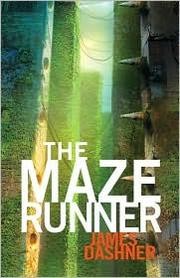
The Maze Runner
Delacorte Press · 2009 · 374 pages
ISBN: 9780385737951
Review Editor
Zoe Adler
Thomas arrives in the Glade with no memory of who he is or why he was sent there. The Glade is a self-sustaining enclosure whose outer walls open each day onto a shifting stone Maze — a structure that has been running since before any of the current residents arrived, and which no one has yet successfully navigated. The Gladers, all boys, have developed their own society, their own language, and their own hierarchy organized around the runners who map the Maze each day. The day after Thomas arrives, a girl appears — the first girl ever sent up — with a note saying she is the last one, ever. James Dashner’s 2009 novel launched a popular series and was adapted into a successful film franchise. As a thriller, it is effective; as a novel, it is somewhat thinner than its premise deserves.
Character Arcs
Thomas is designed as a readerly surrogate: he knows nothing, wants answers, and processes information as the reader does. This is efficient for exposition but limits characterization — his defining qualities are curiosity and stubbornness, which are enough to drive the plot but not enough to make him particularly interesting. Minho, the head runner, has more personality. Newt, the second-in-command, has enough warmth to carry genuine emotional weight in the series’ later installments. Teresa, the girl, arrives too late and with too many secrets to function as a fully realized character in this volume. Gally, the antagonist within the Glade, is somewhat one-dimensional but serves the plot.
Pacing
Dashner understands pace. The novel moves with consistent momentum, and the mystery of the Maze — what it is, who built it, why — is managed with enough information-release to keep the reader engaged without resolving the central questions too quickly. The Grievers, the mechanical creatures that patrol the Maze at night, are effective as threats even if their design is never fully explained. The novel’s final act, which provides some resolution while opening onto a larger story, leaves enough questions to make the sequel feel necessary rather than merely possible. The Maze Runner is a first volume in the craft sense: it earns its sequel rather than simply setting one up.
Thematic Depth
The novel’s themes are largely gestural — questions of memory, identity, and what makes us human are raised without being developed seriously. The Gladers’ society and its rules, which could be an interesting study in how communities organize under pressure, is sketched rather than examined. The larger conspiracy, revealed incompletely at the end, suggests the series will engage with questions about authority and control, but this volume’s thematic content is thinner than its high-concept premise implies. Dashner is primarily interested in the thriller, and the thriller works; readers looking for the depth that comes with the best dystopian fiction should know it’s not fully present here.
Style and Voice
Dashner’s prose is functional and efficient, which is appropriate for the pace he’s maintaining. The Glade’s invented slang — “shuck,” “klunk,” “greenie” — creates a sense of a self-contained culture without requiring the extensive worldbuilding that might slow the story. In less capable hands, invented slang can feel forced; here it settles into the narrative quickly enough that it stops being noticeable. The writing does not distinguish itself stylistically, but it does not impede the story, which is a real achievement in a thriller that depends on momentum.
Verdict
The Maze Runner is a well-constructed thriller that delivers on its premise’s core promise: the Maze is genuinely mysterious, the stakes feel real, and the characters are distinct enough to care about. It does not reach for the thematic depth of the best dystopian YA, and its protagonist is functional rather than compelling. For readers who want a propulsive, competently executed survival thriller, it more than satisfies. For readers who want something to think about after the last page, it leaves them wanting more than the series delivers.
Rating: 3.8 out of 5
Book Details
- Title
- The Maze Runner
- Author
- James Dashner
- Genre
- Young Adult
- Publisher
- Delacorte Press
- Year Published
- 2009
- Pages
- 374
- ISBN
- 9780385737951
- WritersReview Rating
- 3.8 / 5