
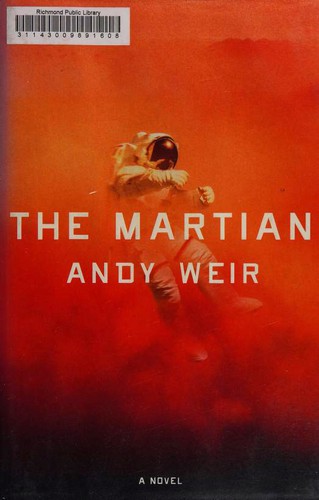
The Martian
Crown Publishers · 2014 · 369 pages
ISBN: 9780804139021
Review Editor
Daniel Okafor
Summary
Mark Watney is stranded on Mars. This is a sentence that should be simple to write and is actually quite difficult, because the weight of what it means takes the entirety of Andy Weir’s novel to properly convey. Watney is not merely alone in a remote location; he is alone on a planet with no breathable atmosphere, where the ambient temperature will kill an unprotected human in minutes, where a single equipment failure can cascade into death with very little warning, and where the nearest other humans are currently 54.6 million kilometers away, moving toward Earth at tens of thousands of kilometers per hour.
His crewmates believe he is dead. They left him behind because the evidence was overwhelming and the alternative — hovering in a storm strong enough to destroy their ascent vehicle — would have killed all of them. They made the correct decision based on available information, and they made it under the kind of pressure that makes correct decisions feel unbearable.
Watney is not dead. He is a botanist and mechanical engineer, and he intends to use both skill sets to survive long enough for anyone to know he needs saving.
The Martian began as a self-published novel in 2011, posted chapter by chapter to Weir’s website. It became one of publishing’s most celebrated discoveries when Crown acquired it in 2013, and its subsequent success — bestseller lists, Academy Award-winning film adaptation, translation into dozens of languages — reflects the genuine rarity of what Weir achieved: a novel that treats its readers as intelligent adults capable of following real science, and rewards that intelligence with one of the most genuinely enjoyable reading experiences in recent genre fiction.
Character Arcs and Development
Mark Watney is one of the great protagonist inventions of contemporary science fiction. He is competent, funny, creative, and self-aware about all three. His log entries — the primary vehicle for narrating his survival — are never what a dying man’s diary should look like, and that’s precisely the point. Watney’s humor is not a coping mechanism applied over despair; it is his genuine intellectual response to catastrophic circumstances. He is someone who finds problems interesting. This is what makes him worth saving.
His character development is subtle precisely because the extreme circumstances make ordinary development impossible. He cannot grow toward something different; he can only become more fully himself. What changes is not who he is but what he is capable of, and the novel documents that expansion with the rigor of a scientific log and the readability of a thriller.
The secondary characters at NASA and aboard the Hermes are efficiently drawn. Weir does not have the space to develop them fully, and he does not pretend to. Venkat Kapoor, the India-born director of Mars missions, is given enough texture to be more than a plot function. Annie Montrose, the NASA PR director, is a consistent comic counterpoint to the institutional gravity of the crisis. The Hermes crew, particularly commander Melissa Lewis and pilot Martinez, are rendered credibly as people whose competence is their primary characteristic. This is appropriate: they are not in a character study, they are in a survival situation, and Weir understands the difference.
Pacing
The novel’s pacing is an engineering achievement in its own right. The primary challenge Weir faces is that the tension is entirely situational: we know Watney is smart enough to solve each immediate problem because he has solved every previous one. The suspense cannot come from character uncertainty; it has to come from the escalating complexity and scale of the problems themselves.
Weir solves this by alternating between Watney’s first-person log entries, third-person scenes at NASA, and eventually scenes aboard the Hermes, creating a rhythm that provides relief and context without diffusing the central tension. The mid-novel pivot, when NASA discovers Watney is alive, transforms the problem from “surviving alone” to “surviving until rescue” and introduces a second clock: the mission timeline that will determine whether any rescue mission can possibly reach him in time.
The final sequence, which I will not describe in detail, is a sustained action set piece that delivers on every promise the novel has made without cheating on the science that made those promises credible. It is extremely difficult to write a climax that is simultaneously technically accurate and emotionally overwhelming. Weir manages it.
Deeper Thematic Exploration
The novel’s most explicit thematic statement comes near the end, when Watney reflects on why humans go to extreme lengths to save each other. He concludes that this impulse is fundamental, that every human culture across history has made extraordinary effort to preserve individual lives, and that this is not inefficiency but something closer to a defining characteristic of the species. The sentiment could easily be saccharine. In context, having watched Watney spend months solving impossible problems and watched Earth spend billions of dollars on a rescue mission with uncertain odds of success, it lands as the conclusion a hard-headed scientist would actually arrive at.
There is also a quieter meditation running through the novel about the relationship between knowledge and survival. Watney’s botany is explicitly useful — he grows food on Mars using human waste as fertilizer, an image that is both completely accurate and quite funny. His engineering enables improvised solutions to problems no mission designer anticipated. The novel is an extended argument that expertise is not a luxury but a survival tool, and that the kind of person who pays close attention to how things work is precisely the kind of person who can keep them working under impossible conditions.
NASA’s institutional response to Watney’s survival is also worth examining. The decision to authorize a rescue mission at enormous cost and risk, over the objections of some administrators, is presented not as heroism but as the institutional expression of that same human impulse Watney identifies. Organizations, the novel suggests, can be vehicles for the best of human instincts as well as the worst.
Style and Voice
Watney’s voice is the novel’s great achievement and its most distinctive element. His log entries are funny, specific, and technically precise without being dry. He explains orbital mechanics and plant biology and equipment repair with the clear pleasure of someone who loves this material, and his humor punctuates the explanations in a way that makes them land differently than they would in a textbook. The reader learns real science in the course of being thoroughly entertained, which is a pedagogical trick that very few writers pull off without either dumbing down the science or making the entertainment feel like a delivery mechanism.
The third-person sections at NASA and aboard the Hermes are written in a plainer style that serves as an effective contrast. These sections feel like the view from the outside: competent, concerned, institutional. The effect is to make Watney’s voice feel like a shaft of light by comparison — singular, irreplaceable, worth every one of the billions it costs to bring him home.
Verdict
The Martian is the kind of book that restores faith in science fiction as a genre capable of being both intellectually rigorous and genuinely popular. It takes its readers seriously, trusts them to follow real physics and chemistry and botany, and rewards that trust with a story that is funny, tense, emotionally resonant, and ultimately hopeful in the most specific and earned way possible.
It is also, quietly, a book about competence as a form of character. Watney is likable not because he is good-looking or tortured or possessed of special powers, but because he is extraordinarily good at his job and he knows it and he uses it. In a genre sometimes accused of prioritizing spectacle over intelligence, The Martian makes intelligence the spectacle.
Essential reading, and a five-star achievement in the hardest challenge science fiction faces: making us care about a problem we cannot directly imagine.
Is the science in The Martian accurate?
Largely yes, with a few acknowledged exceptions. Weir researched the novel extensively, and NASA scientists have praised its technical accuracy in areas including orbital mechanics, Martian atmospheric conditions, and botany. The notable exception is the opening dust storm, which Weir himself has acknowledged is far more violent than Martian atmospheric pressure would actually permit. He kept it for narrative purposes, and its inaccuracy does not substantially affect the credibility of what follows.
How does the movie adaptation compare to the book?
Ridley Scott’s 2015 film adaptation, starring Matt Damon, is broadly faithful and very good. It necessarily compresses and simplifies the novel’s science — the mechanisms of Watney’s survival solutions are abbreviated considerably — and it restructures some scenes for visual effect. The core of the story, Watney’s voice, and the emotional arc are preserved. Most readers who watch the film after reading the book find the simplifications acceptable; most who read the book after the film discover there is significantly more here than the film could contain.
What is Watney’s profession and why does it matter?
Watney is both a botanist and a mechanical engineer — an unusual combination that Weir chose deliberately because it gives his character the specific skill set necessary to solve the specific problems he faces on Mars. The botany allows him to grow food; the engineering allows him to improvise solutions to equipment failures. His survival is not presented as heroic luck but as the application of real expertise to unprecedented circumstances.
Is The Martian suitable for readers who don’t like science fiction?
Yes, and many non-science-fiction readers have found it one of their favorite novels. Its premise requires no familiarity with the genre’s conventions, and its appeal is fundamentally as a survival story and a character study. The science is not intimidating; it is the source of the novel’s humor and tension rather than its barrier to entry. Readers who like Into Thin Air or Endurance tend to love The Martian.
How did The Martian get published?
Weir originally posted the novel chapter by chapter to his website in 2011, making it available for free. At reader request, he also made it available as a Kindle e-book for the minimum price Amazon would allow, at which point it became an immediate bestseller. Crown Publishers acquired the print rights shortly after, and it was published in hardcover in early 2014. The story became a defining case study in the potential of digital self-publishing as a path to traditional publication.
What is the overall tone of The Martian?
Warmer and funnier than its premise suggests. The novel’s great tonal achievement is that it maintains genuine tension and genuine humor simultaneously, neither one undermining the other. Watney faces circumstances that could easily produce a grim survival narrative, and instead produces a narrator who finds his situation interesting. This is not denial; Weir makes clear that Watney understands his predicament completely. He simply approaches it the way a competent scientist approaches any problem: with the intention of solving it.
Are there any sequels to The Martian?
No, and the novel’s ending does not invite one. Weir has written other standalone novels since — Artemis and Project Hail Mary — both of which share The Martian‘s commitment to scientific accuracy and its focus on competent problem-solvers. Project Hail Mary in particular is widely considered his best work since The Martian and is recommended to any reader who loves this novel.
What makes Mark Watney memorable as a protagonist?
His specific, consistent, cheerful competence. Watney is not a hero in the conventional sense — he did not choose his situation, and he does not pretend it is fine. But he responds to it with such complete engagement and genuine humor that reading his log entries feels less like observing a survival ordeal and more like accompanying someone who genuinely finds catastrophe intellectually stimulating. His humor is not armor against the horror; it is evidence that his engagement with the world is simply structured that way.
Book Details
- Title
- The Martian
- Author
- Andy Weir
- Genre
- Science Fiction
- Publisher
- Crown Publishers
- Year Published
- 2014
- Pages
- 369
- ISBN
- 9780804139021
- WritersReview Rating
- 5.0 / 5