
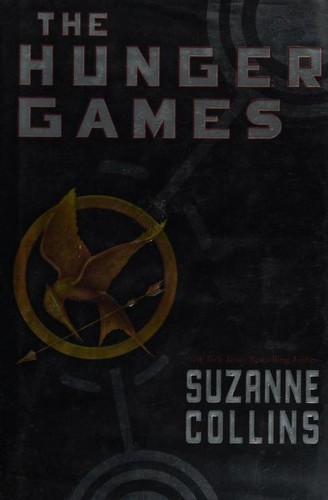
The Hunger Games
Scholastic Press · 2008 · 374 pages
ISBN: 9780439023481
Review Editor
Zoe Adler
A Dystopia Built on Real Fear
Suzanne Collins did not invent the dystopia, but she made it feel newly urgent. The Hunger Games drops readers into Panem – a future North America divided into twelve districts kept in grinding poverty by a Capitol that demands annual tribute in the cruelest form imaginable: two children, selected by lottery, forced to fight to the death on live television. It is a premise that sounds almost too extreme, yet Collins grounds it so thoroughly in recognizable human psychology that it never tips into pure fantasy. The Capitol’s spectacle is recognizably ours – the obsession with celebrity, the voyeuristic thrill of watching suffering from a safe distance, the way entertainment can launder atrocity. Collins wrote this book in 2008, but it reads like a diagnosis of every year since.
Katniss Everdeen: A New Kind of Hero
At the center of everything is Katniss Everdeen, one of the most fully realized protagonists in modern fiction. She volunteers for the Games to save her younger sister Prim, and from that single act of desperate love, her entire character unfolds. Katniss is not naturally heroic – she is calculating, guarded, occasionally ruthless, and deeply practical in the way that only someone who has genuinely gone hungry can be. She does not want to be a symbol or a rebel. She wants to survive, and to bring Peeta Mellark home if she can. Collins refuses to make her sentimental or idealized, and that restraint is what makes her so compelling. When Katniss does act selflessly or bravely, it feels earned rather than scripted.
The Arena as Pure Suspense
The Games themselves occupy most of the novel’s second half, and Collins manages them with extraordinary control. The pacing is relentless – there is always a new threat, a ticking clock, a decision with no good options – but it never feels arbitrary. Every element of the arena has been designed by the Gamemakers to create maximum spectacle, which means the dangers Katniss faces are not random but deliberately cruel. Collins makes the reader feel both the physical reality of the violence and its obscenity as entertainment. The tracker jacker hallucinations, the feast at the Cornucopia, the finale with the mutts – each escalation feels inevitable, not contrived.
The Peeta Problem: Love as Strategy
The romantic subplot between Katniss and Peeta Mellark is more interesting than it first appears. Peeta’s declaration of love during the pre-Games interview forces Katniss into an impossible position: play along and gain sponsors, or reject it and lose a strategic advantage. Collins is sharp enough to leave Katniss genuinely uncertain about her own feelings, and that ambiguity gives the romance real weight. This is not a love triangle in the conventional sense – it is a meditation on whether authentic emotion can exist within a performance, a question the novel never entirely resolves. Peeta himself is a more complex character than he seems: sweet, loyal, and disarmingly honest, but also canny enough to understand that the performance of love might be the only weapon he has.
Language and Voice
Collins writes in tight, muscular prose – present tense, first person, sentences that move. There is almost no ornamentation, which is exactly right for a narrator who has never had the luxury of contemplation. Katniss observes everything with hunter’s precision: the angle of the sun, the weight of her pack, the exact expression on a tribute’s face. The style can feel austere, but Collins uses that austerity to devastating effect in the quieter moments – Rue’s death, the arrangement of flowers, the four-note melody. When the novel asks you to feel something, the sparseness of the surrounding text makes the blow land harder.
What the Novel Gets Right About Power
The deeper achievement of The Hunger Games is its portrait of how power sustains itself through spectacle and compliance. The Capitol does not merely terrorize its districts – it makes them participate in their own oppression, year after year, until resistance seems impossible. Katniss’s small acts of defiance – the dress Cinna designs, the nightlock berries at the finale – work precisely because they force the Capitol to choose between losing and revealing its own cruelty. Collins understands that the most dangerous thing a symbol can do is refuse to behave. The political anatomy of the novel is sharper than most literary fiction published in the same year.
Verdict
The Hunger Games is that rare thing: a genre novel that fully earns its cultural reach. It works as pure entertainment – few books of any kind are this compulsively readable – and it also works as a genuinely intelligent piece of social criticism. Collins took a pulp premise and made something morally serious out of it without sacrificing a page of momentum. The sequels complicate and deepen the story, but the first novel stands completely on its own. If you have not read it, or if you dismissed it as a children’s book, you are missing one of the defining American novels of the last two decades.
What is The Hunger Games about?
The Hunger Games is set in the dystopian nation of Panem, where the totalitarian Capitol forces each of its twelve districts to send two young “tributes” to compete in an annual televised death match. Sixteen-year-old Katniss Everdeen volunteers to take her younger sister’s place and must fight to survive while navigating political manipulation, genuine danger, and a complicated relationship with her fellow District 12 tribute, Peeta Mellark.
Is The Hunger Games appropriate for young readers?
The novel is marketed as Young Adult and is appropriate for readers aged twelve and up, though parents of younger or more sensitive children should be aware that it contains violence, death, and themes of oppression and state terror. Collins does not graphic in her depictions, but the premise – children killing children – is genuinely disturbing and is meant to be. Most educators and librarians consider it suitable for middle school readers and above.
How does The Hunger Games compare to other dystopian novels?
Collins sits in a tradition that includes Orwell’s 1984 and Huxley’s Brave New World, but she filters those concerns through a YA lens that makes them immediately accessible to young readers. The Hunger Games is more action-driven than either predecessor and more focused on individual survival than systemic analysis, but it is smarter about media, celebrity, and spectacle than almost any other novel in the genre. It launched a wave of YA dystopias in its wake, none of which quite matched the original.
Do I need to read the sequels?
The Hunger Games ends satisfyingly as a standalone novel – the immediate story is resolved, even if the larger conflict is not. The sequels, Catching Fire and Mockingjay, expand the world and deepen the political stakes considerably, and are worth reading if the first novel hooks you. Mockingjay in particular takes some bold and divisive narrative risks that make the series as a whole more interesting than any individual volume.
What themes does The Hunger Games explore?
The novel’s central themes include state violence and spectacle, the ethics of survival, the performance of identity under coercion, class inequality, and the corrupting power of media. Collins is especially good on the way entertainment and atrocity can become intertwined – the Capitol’s Games are recognizably descended from Roman gladiatorial combat, but they also reflect contemporary reality television and the desensitizing effects of watching suffering as sport.
How does the film adaptation compare to the book?
The 2012 film adaptation starring Jennifer Lawrence is a strong and faithful adaptation, though it necessarily loses the interiority of Katniss’s first-person narration. The film is excellent at spectacle and action but slightly flattens the political analysis. Lawrence’s performance is one of the great YA adaptations in cinema, capturing Katniss’s guardedness and physicality exceptionally well. The film is worth watching but not a substitute for the novel.
Is The Hunger Games based on real events or mythology?
Collins has cited several inspirations: the myth of Theseus and the Minotaur (Athenian tributes sent to Crete to be killed), Roman gladiatorial spectacle, and her own experience channel-surfing between reality television and news coverage of the Iraq War. The name “Panem” comes from the Latin phrase “panem et circenses” – bread and circuses – the Roman strategy of keeping the populace docile through food and entertainment. The novel is not based on specific historical events but draws broadly on the history of empire and public spectacle.
Who is the ideal reader for The Hunger Games?
The novel is genuinely for everyone – it was written for young adults but has found an enormous adult readership because its concerns are universal. Readers who enjoy fast-paced action, morally complex protagonists, and political fiction with real stakes will find it rewarding. Those who primarily read literary fiction and are skeptical of genre novels may be surprised by how much craft and intelligence Collins brings to what could have been a straightforward thriller.
Book Details
- Title
- The Hunger Games
- Author
- Suzanne Collins
- Genre
- Young Adult
- Publisher
- Scholastic Press
- Year Published
- 2008
- Pages
- 374
- ISBN
- 9780439023481
- WritersReview Rating
- 5.0 / 5