
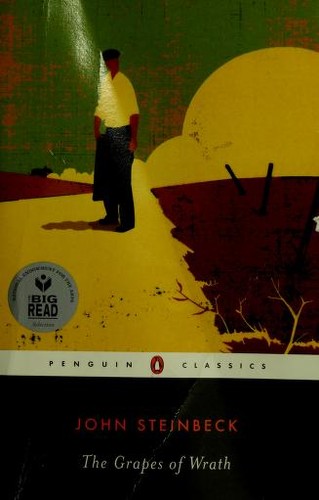
The Grapes of Wrath
Penguin Books · 1939 · 455 pages
ISBN: 9780143039433
Review Editor
Eleanor Marsh
When The Grapes of Wrath appeared in 1939, it was received as a political document as much as a novel, inspiring fury from California’s agricultural interests and bringing its author before a Congressional investigation. It is indeed a political novel-passionately, unapologetically so-but Steinbeck’s art transforms polemic into something that outlives its immediate occasion and achieves the permanence of myth.
The novel follows the Joad family, Oklahoma sharecroppers driven from their land by drought, banks, and the mechanization of agriculture, as they make the impossible journey west along Route 66 to the promised land of California. What they find there is exploitation, hostility, and a social order as cruel in its own way as the one they fled. The intercalary chapters-Steinbeck’s choral interruptions, written in a style halfway between documentary and poetry-situate the Joads’ particular suffering within the larger catastrophe of the Dust Bowl migration.
The novel’s formal audacity has perhaps been underestimated. Those intercalary chapters risk everything on the reader’s patience and deliver something that a purely novelistic approach could not: a sense of historical inevitability that makes individual suffering resonate as collective experience. Ma Joad, who holds the family together through every successive loss, is one of the great matriarchal figures in American fiction.
The famous ending-with Rose of Sharon nursing a dying stranger at the book’s final moment-has been argued about ever since. It is too schematic, too symbolic, for some readers. But it is undeniably powerful, and it declares what kind of book this is: not a documentary but a testament, written in the tradition of the prophets, insisting that solidarity in suffering is the only dignity left.
Book Details
- Title
- The Grapes of Wrath
- Author
- John Steinbeck
- Genre
- Literary Fiction
- Publisher
- Penguin Books
- Year Published
- 1939
- Pages
- 455
- ISBN
- 9780143039433
- WritersReview Rating
- 5.0 / 5